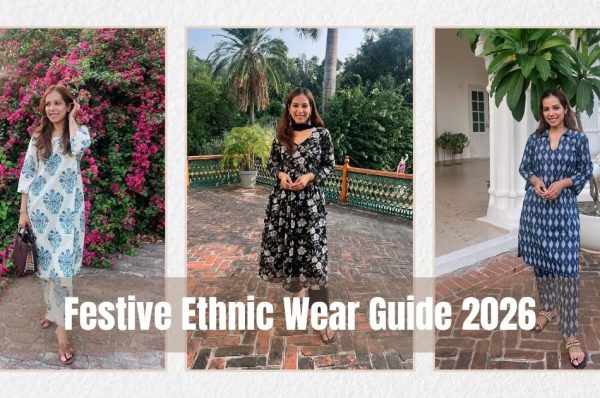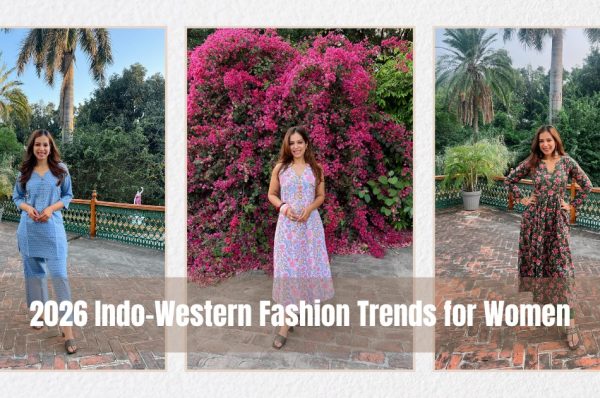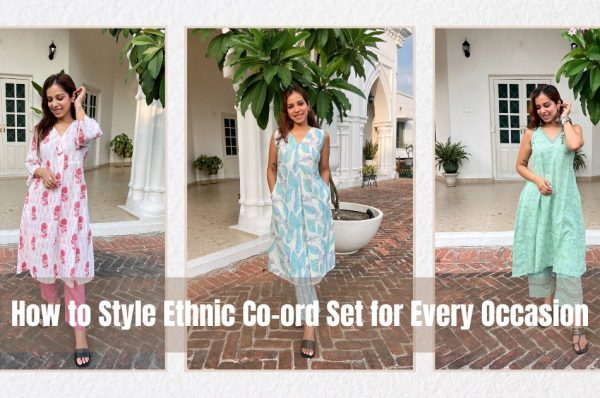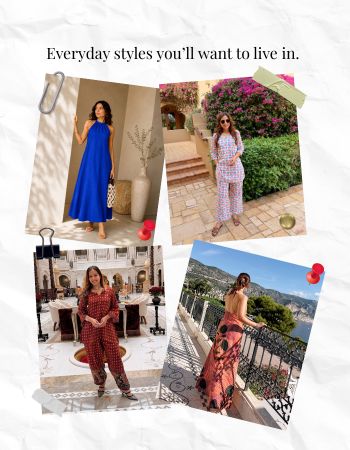
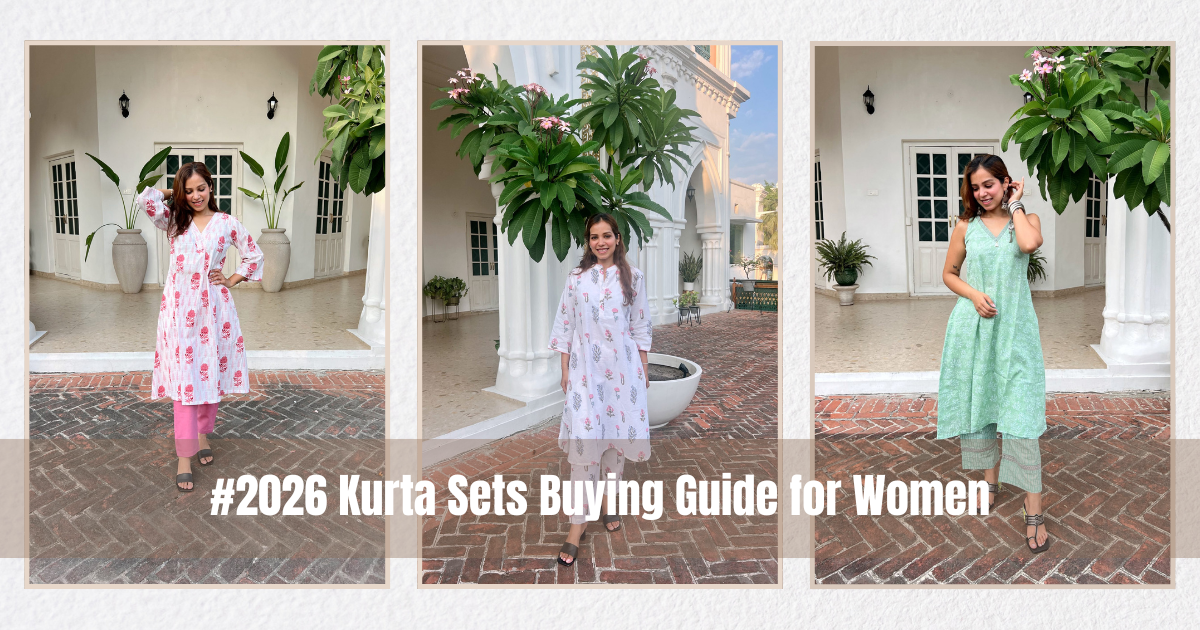
Kurta sets for women are the most versatile piece of ethnic wear you can own dressed up for Diwali, worn to the office on a Monday, or kept cotton-light through a North Indian summer. Yet most women, including NRI buyers ordering from the US, UK, or Australia, end up with a kurta set that fits wrong, pills after one wash, or reads as too festive when they needed everyday casual. This guide covers everything: what a kurta set actually is (2-piece vs 3-piece), how to choose fabric by occasion, how to pick for your body type, a full NRI size conversion table, a fabric care matrix, and clear budget tiers. By the end, you will know exactly what to buy and why.
India’s ethnic wear market is projected to reach ₹1.7 lakh crore by 2026 (BusinessWire), and kurta sets sit at the centre of that growth, 9 in 10 Indian women consumers prefer cotton-rich fabrics for daily wear (Cotton Council International & Cotton Inc., Global Lifestyle Monitor India). This guide is built on that data, plus the on-ground styling knowledge of our founder, Niharika Agarwal.
Written by Niharika Agarwal, Founder & Lead Stylist, Rangaari – a homegrown women’s wear brand from Pilibhit, North India. Niharika curates every kurta set in the Rangaari catalogue with the specific needs of Indian and NRI women in mind. Cotton Council International · Fibre2Fashion
What Is a Kurta Set? (And Why It Matters Which Type You Buy)
A kurta set is a co-ordinated outfit that pairs a kurta (a long tunic top) with a matching or complementary bottom and, in 3-piece versions, a dupatta. The “set” format means the pieces are cut from the same fabric, same print run, same colour palette, so you get a complete, cohesive look without hunting for matches separately.
2-piece kurta set = Kurta + Bottom (palazzo, straight pant, salwar, legging, sharara, or dhoti pant)
3-piece kurta set = Kurta + Bottom + Dupatta
The distinction matters because a 3-piece set’s dupatta is cut from the same fabric bolt as the kurta, the colour, texture, and print match perfectly. Sourcing a dupatta separately later to replicate that match is very difficult. For any occasion where a dupatta is expected (Eid, Navratri, weddings, Puja), buy the 3-piece.
Types of Bottoms in a Kurta Set
| Bottom Type | Silhouette | Best For | Comfort Level | Occasion Signal |
|---|---|---|---|---|
| Palazzo | Wide, flared | Festive, casual, daily wear | Very high | Relaxed-festive |
| Straight pant | Slim, tapered | Office, semi-formal | High | Polished |
| Salwar | Tapered at ankle | Traditional, festive | High | Classic ethnic |
| Sharara | Flared from the knee | Wedding, Eid, festive events | Moderate | Formal-festive |
| Legging | Fitted | Casual, travel | Very high | Everyday |
| Dhoti pant | Draped, structured | Festive, Indo-western events | Moderate | Contemporary ethnic |
The bottom silhouette changes the formality of the whole outfit. The same floral chanderi kurta worn with a sharara reads as wedding-guest appropriate; swap in a straight pant and it works for a corporate Diwali celebration.
Kurta Set Fabric Guide: Cotton, Chanderi, Georgette, Linen and More
Fabric is where most kurta set purchases go wrong. A chanderi kurta set looks beautiful in a product photograph but will feel heavy and warm at a summer Puja in May. Here is the complete guide to every fabric you will encounter:
| Fabric | Best Season | Feel on Skin | Occasion Fit | How It Drapes | Price Signal |
|---|---|---|---|---|---|
| Pure cotton | Summer, year-round | Cool, breathable | Casual, daily wear, office | Holds shape, structured | Budget–mid |
| Cotton-linen blend | Summer, monsoon | Textured, airy | Casual, office | Slightly firm, softens with wear | Mid |
| Chanderi silk | October–February (festive) | Lightweight, lustrous | Festive, wedding, party | Flows beautifully | Mid–premium |
| Georgette | Festive season, parties | Fluid, soft | Evening, party, wedding | Flows, very slightly sheer | Mid–premium |
| Rayon / Viscose | Monsoon, autumn | Soft, drapy | Casual, everyday | Fluid, can cling slightly | Budget–mid |
| Linen | Summer | Textured, breathable | Casual, smart-casual, office | Structured, relaxed | Mid |
| Silk blend | Winter, festive | Warm, subtle sheen | Wedding, festive, formal | Rich, heavier | Premium |
| Mul cotton / Muslin | Summer, maternity | Ultra-light, loose weave | Casual, home, maternity | Loose, delicate | Budget–mid |
Niharika’s Fabric Note
“At Rangaari, we use cotton and cotton-linen blends as our everyday-wear base because North Indian summers in Pilibhit run at 40°C-plus from April through September, anything other than breathable natural fabric is uncomfortable. For Diwali and the wedding season from October to December, we bring in chanderi and georgette. If you are an NRI ordering from the UK or a cooler climate, chanderi sets travel beautifully, they layer over a slip under a light wrap, pack flat without wrinkling badly, and look polished at indoor events in any season.”
Occasion Guide: The Right Kurta Set for Every Indian Event
One of the biggest advantages of a kurta set over a standalone kurta is that the co-ordinated pieces signal occasion clearly. Here is how to decode the occasion and match your set:
| Occasion | Fabric Choice | Recommended Bottom | Detailing Level | Dupatta? | What to Avoid |
|---|---|---|---|---|---|
| Daily / Casual wear | Cotton, mul cotton, rayon | Legging or palazzo | Minimal – solid or subtle print | No | Heavy embroidery, sequins |
| Office / Corporate | Cotton, linen, soft rayon | Straight pant | Block print or subtle embroidery | Optional (tucked) | Loud metallic, very sheer |
| Puja / Religious function | Cotton, chanderi | Salwar or palazzo | Traditional print, zari border | Yes (usually expected) | Backless, low-cut necklines |
| Navratri / Garba | Cotton, rayon | Legging, sharara | Mirror work, bright festive colours | Yes | Dark or very muted colours |
| Diwali / Family celebration | Chanderi, georgette | Straight pant or sharara | Zari border, light embroidery | Yes | All-plain everyday cotton |
| Eid | Georgette, silk blend | Sharara or palazzo | Embroidered yoke or neckline | Yes (preferred) | Heavy cotton sets |
| Wedding (as a guest) | Chanderi, silk blend, georgette | Sharara or salwar | Detailed embroidery, prints | Yes | Casual cotton basics |
| Casual travel | Cotton, rayon | Legging or palazzo | Easy prints, no metallic | No | Fragile silk, georgette |
The NRI Packing Formula: Heading home for a wedding season? One 3-piece chanderi kurta set covers the wedding and Diwali dinner. Two cotton-palazzo 2-piece sets handle daily family visits. One rayon palazzo set works for a farewell dinner or casual outing. That is a full two-week India trip in three kurta sets.
Size & Fit by Body Type: What the Brands Don’t Tell You
This is the section that no major kurta set brand – Libas, Myntra, Fabindia, Biba currently provides for shoppers. Here is how to choose your kurta set cut based on your proportions:
| Body Type | Kurta Length | Neckline | Bottom | Effect |
|---|---|---|---|---|
| Petite (under 5’2″) | Hip-length to knee-length | V-neck or keyhole | Straight pant or legging | Adds visual height |
| Tall (above 5’7″) | Knee-length to mid-calf | Boat neck or round neck | Palazzo or flared pant | Balances proportions |
| Pear shape (wider hips) | Knee-length or longer, A-line flare | Wide or off-shoulder neckline | Straight pant or churidar | Draws the eye upward |
| Apple shape (wider torso) | Straight or anarkali flare, covers waist | Deep V-neck or keyhole | Wide palazzo | Skims and lengthens the torso |
| Hourglass | Any length works | Any neckline | Fitted palazzo or straight pant | Highlights natural shape |
| Plus size | Knee-length A-line, flared hem | V-neck or keyhole | Palazzo | Most flattering and breathable |
All kurta sets in the Rangaari Kurta Sets collection are available in sizes XS to XXXL, designed for real Indian body proportions – not just a scaled-up version of a sample size.
NRI Buyer’s Size Guide: India to US, UK & Australia
This is the conversion table NRI women ask for most. Indian ethnic wear sizing does not map neatly to Western sizing, the cut is different, the shoulder width is usually narrower, and the ease (extra room) in the kurta body is cut for Indian proportions. Always cross-check with the individual product’s measurement chart, but use this as your starting reference:
| Indian Size | US Women’s | UK Size | AU Size | Bust (inches) | Waist (inches) | Hip (inches) |
|---|---|---|---|---|---|---|
| XS | 0–2 | 4–6 | 6–8 | 32–33 | 26–27 | 34–35 |
| S | 4–6 | 8–10 | 10–12 | 34–35 | 28–29 | 36–37 |
| M | 8–10 | 12–14 | 14–16 | 36–37 | 30–31 | 38–39 |
| L | 12–14 | 16–18 | 18–20 | 38–39 | 32–34 | 40–41 |
| XL | 16–18 | 20–22 | 22–24 | 40–42 | 35–37 | 42–44 |
| XXL | 20–22 | 24–26 | 26–28 | 44–46 | 38–40 | 46–48 |
| XXXL | 22–24 | 28–30 | 30–32 | 48–50 | 42–44 | 50–52 |
NRI Sizing Tips:
– If you are between two sizes, go one size up in cotton. Cotton kurtas can feel snug if undersized, especially after the first wash causes slight shrinkage.
– For georgette and rayon (which drape rather than hug), true-to-size is usually fine.
– Palazzo bottoms in particular have generous waist elastic, focus on the kurta fit, and the palazzo will adjust.
– Still unsure? Email [email protected] with your bust, waist, and hip measurements. Our team will recommend a size before you order.
North India Regional Climate Guide: Fabric by Season
Rangaari is based in Pilibhit, Uttar Pradesh and every fabric in the collection is chosen with the extremes of the North Indian climate in mind. This is the climate context behind the fabric choices above:
| Season | Months | Temp. Range (North India) | Best Kurta Fabric | Avoid |
|---|---|---|---|---|
| Summer | April–June | 35–47°C | Mul cotton, pure cotton, cotton-linen | Chanderi, silk, georgette |
| Monsoon | July–September | 28–35°C (humid) | Rayon, cotton | Linen (goes limp when damp), silk |
| Festive / Autumn | October–November | 18–28°C | Chanderi, georgette, light cotton | Heavy silk |
| Winter | December–February | 8–18°C | Silk blend, chanderi, heavier cotton | Thin muslin or mul cotton |
| Spring | March | 22–32°C | Cotton, cotton-linen, light chanderi | Thick or padded silk |
For NRI buyers in the UK, US, Canada, or Australia: thin cotton and mul cotton make excellent spring and summer wear in those climates. Chanderi sets are suited for indoor occasions year-round in cooler climates.
Budget Tiers: What Changes as You Spend More on a Kurta Set
| Budget | Price Range | What You Get | Occasion Fit |
|---|---|---|---|
| Entry | Under ₹1,500 | Cotton or rayon, block prints or simple discharge prints, minimal detailing, 2-piece | Daily wear, casual outings |
| Mid-range | ₹1,500–₹3,000 | Better quality cotton, chanderi, georgette; hand block or fine prints; some embroidery; 2–3 piece options | Office, semi-festive, Puja, Navratri |
| Premium | Above ₹3,000 | Chanderi silk or georgette with zari work; hand embroidery on yoke or hem; fine dupatta included; 3-piece | Weddings, Diwali, Eid, formal events |
At Rangaari, most everyday kurta sets start at ₹1,200. The focus is breathable natural fabrics at accessible prices, not synthetic fast fashion at premium margins.
Fabric Care Matrix: How to Make Your Kurta Set Last
The second biggest reason for disappointment (after wrong sizing) is a set that shrinks, fades, or loses its drape after two washes. Here is exactly how to treat each fabric:
| Fabric | Machine Wash? | Hand Wash? | Dry Clean? | Iron | Storage |
|---|---|---|---|---|---|
| Cotton | Yes (cold water, gentle cycle) | Yes | No | Medium heat | Fold or hang |
| Cotton-linen blend | Yes (cold, gentle) | Yes | No | Medium heat, slightly damp | Fold or hang |
| Chanderi silk | No | Yes (lukewarm, very mild soap) | Preferred for embroidered pieces | Low heat, always reverse side | Hang in muslin wrap |
| Georgette | Delicate cycle only | Yes (cool, very gentle) | Yes for heavy embroidery | Low heat, steam preferred | Hang, never fold |
| Rayon / Viscose | No, stretches and deforms | Yes (cool water, no twisting) | No | Low heat | Fold flat |
| Silk blend | No | Yes (cool water, no wringing) | Recommended | Low heat, use pressing cloth | Hang in muslin wrap |
| Mul cotton / Muslin | Yes (cold, gentle) | Yes | No | Low heat | Fold |
The One-Rule Summary: If it has embroidery, hand-wash or dry-clean it. If it is pure cotton, the machine’s gentle cycle is fine. Never wring georgette or rayon, hang them and let gravity do the work.
Niharika’s Pick: The One Kurta Set Every Wardrobe Needs
“If I had to recommend one kurta set that every Indian woman, whether she lives in Pilibhit, Pune, or London – should own, it is this: a mid-weight cotton kurta set in a hand block print with a palazzo bottom, in a colour base you already wear well (navy, rust, olive, deep mustard, or off-white).
Why cotton? Because it works at the office on a Tuesday, at a family Puja on Sunday, and in a cabin bag for a weekend trip without creasing. Why hand block print? Because no two are identical, it carries craft, not commodity. Why palazzo? Because it is the most inclusive silhouette across body types, and the most comfortable through a full day of Indian summer.
Pair it with kolhapuri flats for daytime, juttis for an evening event, and a simple embroidered stole if a dupatta moment calls. That one set does the work of three separate outfits.
Browse the Kurta Sets collection and filter by cotton, that is where I would start.”
— Niharika Agarwal, Founder & Lead Stylist, Rangaari
The Rangaari Kurta Set Collection
Rangaari’s kurta sets are designed from Pilibhit, North India, with hand block prints, breathable natural fabrics, and inclusive sizing from XS to XXXL as non-negotiables. Every set is styled for the Indian and NRI woman who needs comfort without sacrificing occasion-readiness.
- Browse All Kurta Sets – full 2-piece and 3-piece cotton and chanderi collection
- Short Kurtis for Women – shorter kurta tops to style with your own bottoms
- Tunics for Women – longer, relaxed silhouettes for layered or standalone wear
- Kaftans for Women – for home, lounge, or casual weekend wear
Also worth reading before you buy:
– Kurta vs Kurti vs Tunic: Which One Is Right for You? – understand the differences before you choose
– Short Kurtis for Jeans: The Complete Styling Guide – if you prefer pairing a short kurta with denim
Your Kurta Set Buying Checklist
Before you add to cart, run through this:
- Fabric matches the occasion: cotton for daily and office, chanderi or georgette for festive and wedding
- Bottom type suits your body shape: palazzo for comfort and inclusivity, straight pant for a polished office look
- Size verified against the measurement chart: NRI buyers use the conversion table in this guide
- 2-piece or 3-piece confirmed: if a dupatta is expected at the event, check the listing before buying
- Fabric care understood before ordering: silk and georgette need hand wash or dry clean
- Return and exchange policy confirmed: especially for gifting or international orders
Frequently Asked Questions About Kurta Sets for Women
What is the difference between a kurta set and a salwar kameez?
A kurta set is the broader, modern term – it includes any co-ordinated pairing of a kurta with a bottom, regardless of the bottom style. A salwar kameez specifically means a kurta (kameez) paired with a salwar (a tapered, pleated bottom), usually with a dupatta. All salwar kameez are a type of kurta set, but kurta sets today come in palazzo, sharara, straight pant, and legging pairings that are not salwar kameez.
Which fabric is best for a kurta set in Indian summer?
Pure cotton, mul cotton, or a cotton-linen blend. These breathe well, absorb moisture, and stay cool even in 40°C North Indian heat. Avoid rayon and georgette in peak summer, they trap heat and cling uncomfortably in direct sun. Linen is a good office-wear choice in summer but goes limp in monsoon humidity.
Can NRI women in the US, UK, or Australia order kurta sets from Indian brands?
Yes. Most Indian ethnic wear brands, including Rangaari, ship internationally. The critical step is sizing, Indian sizing runs slightly smaller in the shoulders and bust compared to Western sizing. Use the NRI size conversion table in this guide and measure your bust, waist, and hip before ordering. If in doubt, size up.
What is a 3-piece kurta set and is it worth the higher price?
A 3-piece set includes the kurta, matching bottom, and a dupatta. The dupatta is cut from the same fabric run as the kurta, colour and texture match is exact. For festive occasions, weddings, Eid, and Navratri where a dupatta is expected or traditional, the 3-piece is worth the premium. For office and daily wear where a dupatta is rarely practical, a 2-piece is the better buy.
How do I style a kurta set for the office without looking too ethnic?
Choose a straight-cut kurta (knee-length or just below the knee) in a solid or block-print cotton, paired with a straight pant. Skip heavy embroidery and any metallic or sequinned work. Kolhapuri flats or simple block-heeled sandals work well. A 2-piece cotton set in navy, slate grey, rust, or deep teal reads as polished in most Indian office environments. Skip the dupatta unless your workplace is traditionally formal.
What size should I choose if I am between sizes in a kurta set?
Go one size up if you are between sizes in cotton. Cotton can feel snug when undersized and may tighten slightly after the first wash. For georgette and rayon, which drape rather than hug, true-to-size usually works. Palazzo bottoms are forgiving, they have generous elastic waists that adjust across a 2–3 size range.
Is a palazzo kurta set appropriate for a wedding as a guest?
Yes, but fabric matters more than silhouette. A chanderi or georgette kurta with a matching printed palazzo and a fine dupatta reads as a complete, wedding-appropriate guest outfit. A plain cotton palazzo set, however well-fitted, reads as casual and would be underdressed at most Indian weddings. The fabric and detailing of the kurta determine the occasion-readiness; the palazzo bottom alone does not.
What is the most versatile kurta set to own as a first purchase?
A knee-length cotton kurta in a hand block or geometric print, paired with a solid-colour palazzo, in a neutral-warm colour – rust, indigo, mustard, olive, or off-white. It works from daily casual to semi-festive, travels without significant creasing, layers with a stole for a more formal moment, and crosses seasons with light outerwear in winter. It is the ethnic wear equivalent of a classic white shirt one piece that earns its space in the wardrobe every single week.
Published: July 2026 · Author: Niharika Agarwal, Founder & Lead Stylist, Rangaari · rangaari.com
Sources: BusinessWire – India Ethnic Wear Market Forecast 2026 · Cotton Council International & Cotton Inc., Global Lifestyle Monitor India (cotton fabric preference data)