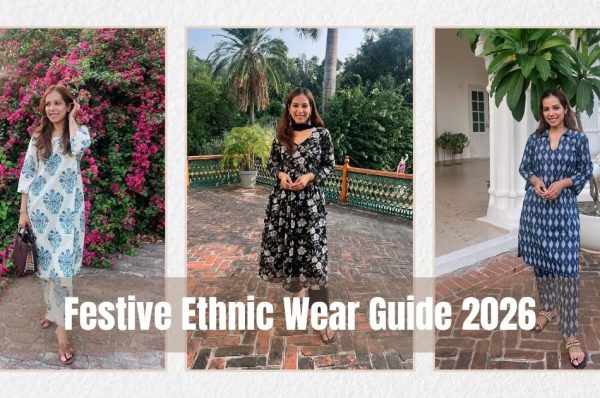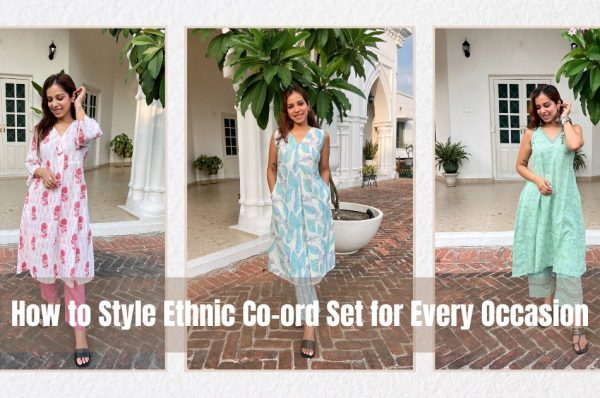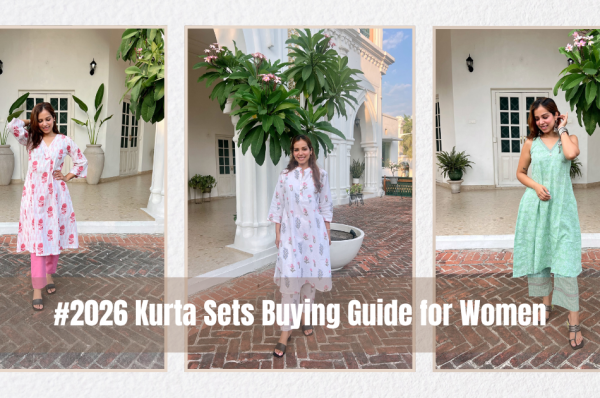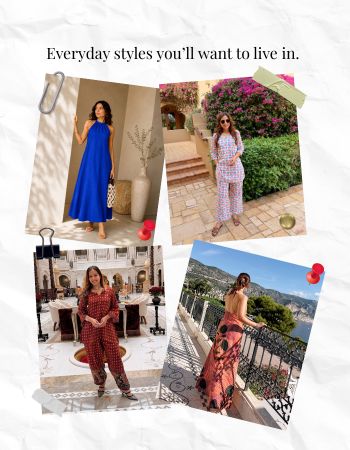
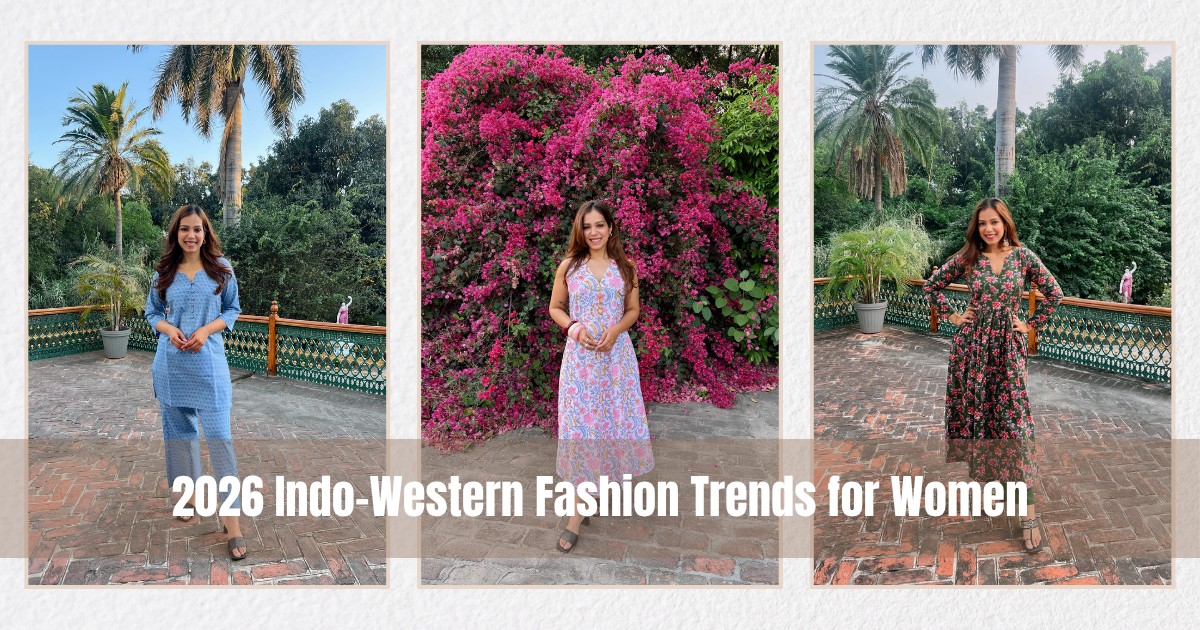
Indo-Western fusion wear is the fastest-growing category in Indian women’s ethnic fashion right now, and for good reason. It solves a real problem: the outfit that reads as “too traditional” for a corporate event and the outfit that reads as “not festive enough” for a family function are usually two completely different wardrobes. Fusion wear closes that gap. It takes the silhouettes, fabrics, and drape techniques of Indian ethnic wear – the kurta, the dupatta, the palazzo and reworks them with contemporary cuts, so one outfit can move between a Diwali lunch, a work presentation, and a friend’s sangeet without feeling like a costume change.
Indo-Western fusion wear is clothing that deliberately combines Indian ethnic elements (kurtas, dupattas, traditional prints, draping) with Western silhouettes and construction (fitted tailoring, structured co-ords, cropped jackets, palazzo trousers cut like wide-leg pants). It is not a single garment type, it is a styling philosophy applied across kurtas, co-ord sets, jackets, and dresses.
Urban Indian women aged 18–35 are driving this shift hard: industry estimates put the fusion wear segment growing at roughly 14% year-on-year, and more than 60% of urban women in this age bracket now own at least one Indo-Western piece in their wardrobe. NRI buyers shopping from the US, UK, Canada, and Australia are an equally large share of the demand – fusion wear travels well, needs no ironing discipline a sari demands, and reads as “Indian” without requiring draping expertise. This guide covers exactly what counts as fusion wear, the silhouettes worth owning, how to choose fabric, how to style for six different occasions, and a size/fit framework that works whether you’re shopping in Pilibhit or Toronto.
Written by the Rangaari Style Team ~ Rangaari is a homegrown women’s ethnic wear brand from Pilibhit, North India, founded to make well-fitted, fairly priced fusion and ethnic wear accessible to Indian and NRI women.
What Exactly Is Indo-Western Fusion Wear?
The term gets used loosely, so it helps to be precise. Indo-Western fusion wear sits on a spectrum between two poles:
- Pure ethnic wear: a sari, an anarkali, a traditional salwar suit. Fully Indian in silhouette, fabric, and construction.
- Pure Western wear: a shift dress, trousers and a blouse, a blazer set. No Indian design elements at all.
Fusion wear lives in the middle, and where exactly it sits on that spectrum depends on the piece:
| Element | Indian Influence | Western Influence |
|---|---|---|
| Silhouette | Kurta length, A-line flare, dupatta drape | Fitted waist, structured shoulders, cropped hemlines |
| Fabric & Print | Block print, ikat, bandhani, chanderi | Solid colors, minimalist prints, denim, structured cotton |
| Construction | Hand-embroidery, mirror work, gota trim | Tailored seams, zip closures, blazer-style lapels |
| Draping | Dupatta, pallu-style drapes | Stole styling, asymmetric layering |
A co-ord set, a fitted kurta top paired with matching palazzo pants, no dupatta is fusion wear because the silhouette is Western-tailored even though the fabric and print are ethnic. A traditional 3-piece kurta set with a dupatta cut from the same fabric bolt is closer to pure ethnic wear. Understanding this spectrum matters because it tells you how “safe” or “statement” a piece will read at a given event, more on that in the occasion guide below.
The 7 Core Indo-Western Silhouettes You Should Know
Before shopping, it helps to know the vocabulary. These are the silhouettes that make up nearly every fusion wear category on the market in 2026.
1. Kurta + Palazzo Co-ord Set
A fitted or semi-fitted kurta top paired with matching wide-leg palazzo pants, cut from the same fabric. No dupatta, which is what makes it read as “fusion” rather than “ethnic.” Rangaari’s Saanjh Co-ord Set is a good example of this silhouette done in breathable cotton.
2. Cape or Jacket Over Kurta
A structured, often sleeveless cape or open-front jacket layered over a fitted kurta or kurti and slim pants. The cape adds Western tailoring drama to an otherwise traditional base.
3. Dhoti Pants with a Crop Top or Kurti
Dhoti pants, draped, gathered at the ankle – paired with a short, fitted kurti or crop top. This is one of the more “statement” fusion looks and reads well at contemporary weddings and sangeet functions.
4. Asymmetric Hem Kurta with Straight Pants
A kurta with a high-low or diagonal hemline, worn over slim straight-cut pants or jeans. Popular for office-appropriate fusion because it’s polished without being ornate.
5. Indo-Western Jumpsuit
A jumpsuit cut in ethnic fabric – block print, chanderi, or ikat with a fitted bodice and wide-leg trouser silhouette. One-piece convenience with fusion styling.
6. Dupatta-as-Stole
Not a garment on its own, but a styling technique: a traditional dupatta draped like a Western stole or scarf over a plain kurta or even a Western top, rather than pinned in the classic pallu style. This single styling choice can turn any plain kurta into a fusion look.
7. Structured Anarkali with a Belt
A modern take on the classic anarkali flared from the bust and cinched at the waist with a structured belt, a distinctly Western tailoring touch on a traditional silhouette. Reads more formal, works well for evening events.
Fabric Guide: What to Choose and When
Fabric choice affects both comfort and how “dressy” a fusion piece reads. Here is the practical breakdown:
| Fabric | Best For | Feel | Care Level |
|---|---|---|---|
| Cotton / cotton-linen blend | Daily wear, office, summer | Breathable, structured | Easy – machine wash |
| Chanderi silk | Festive, evening events | Lightweight sheen, flowy | Moderate – hand wash/dry clean |
| Rayon / viscose | Everyday fusion, travel | Soft, drapes fluidly | Easy – machine wash, gentle |
| Georgette | Party, wedding-guest | Fluid, slightly sheer | Moderate – dry clean recommended |
| Denim-ethnic blend | Casual fusion (jacket/cape) | Sturdy, structured | Easy – machine wash |
| Block-print cotton | Everyday statement pieces | Breathable, textured | Easy – cold wash, mild detergent |
For India’s climate, cotton and cotton-linen fusion pieces cover the majority of the calendar, they’re breathable through summer and monsoon, and layer well with a jacket or cape in winter. NRI buyers in colder climates should lean toward chanderi or georgette pieces for evening events and keep cotton co-ords for indoor daytime wear.
How to Style Indo-Western Fusion Wear for 6 Occasions
This is where most guides stay generic. Specificity is what actually helps you get dressed, so here’s an occasion-by-occasion breakdown.
1. Office / Work Days
Stick to the asymmetric-hem kurta with straight pants, or a simple kurta-palazzo co-ord in a solid or subtle print. Avoid heavy embroidery or mirror work, keep jewelry minimal (small studs, a thin chain). This look pairs naturally with our guide to picking tunics by body type, fabric and occasion if you want more options beyond fusion specifically.
2. Casual Weekend / Errands
Kurta-palazzo co-ords in breathable cotton are the easiest weekend uniform, comfortable enough for a full day out, put-together enough for a lunch stop. If you already own co-ord pieces, our co-ord sets styling guide covers how to remix the same set five different ways.
3. Festive Family Function (Diwali, Karva Chauth, Puja)
This is where the dupatta-as-stole technique earns its place, drape a chanderi or block-print dupatta loosely over a fitted kurta and palazzo set for a look that’s festive without full ethnic formality. For festive-ready pieces, browse our kurta sets collection.
4. Wedding Guest (Daytime Function)
Dhoti pants with a fitted crop kurti, or a structured anarkali with a belt, both read appropriately festive without competing with the bride. Georgette or chanderi in a richer color (deep teal, maroon, mustard) works well for daytime wedding functions.
5. Sangeet / Evening Wedding Function
This is the occasion for your most statement fusion piece, an Indo-Western jumpsuit in block print or ikat, or a cape-over-kurta look, both photograph well and allow movement for dancing, which a heavily draped sari or lehenga doesn’t.
6. Travel / NRI Long-Haul Flights
Rayon or viscose kurta-palazzo sets are the most travel-practical fusion option, they resist wrinkling, breathe well in recycled cabin air, and don’t need styling effort on arrival. Many NRI buyers keep one fusion co-ord specifically as a “flight outfit” that also works for a same-day family gathering after landing.
Sizing and Fit: What NRI and Indian Buyers Should Know
Fusion wear runs differently from pure ethnic wear because co-ords and jumpsuits are cut with Western tailoring precision, meaning bust, waist, and hip measurements matter more than they do for a loose kurta.
- Take your own measurements, don’t rely on a “usual size” across brands, Indian ethnic wear sizing and Western sizing charts are not standardized against each other, and fusion pieces sit between the two systems.
- Co-ord sets and jumpsuits should be checked against both top and bottom measurements separately – many women are a different relative size on top vs. bottom, which a co-ord’s matched sizing can’t always account for.
- Kurta-palazzo sets are more forgiving – palazzo pants have a wide, flowy leg that accommodates a size range, so err toward your kurta measurement when between sizes.
- NRI buyers should always check whether a brand’s size chart uses Indian, UK, or US sizing. Rangaari’s product pages list all three conversions to avoid a guessing game at checkout.
Frequently Asked Questions
What is the difference between Indo-Western and pure ethnic wear?
Pure ethnic wear (a sari, a traditional anarkali) uses fully Indian silhouettes, draping, and construction. Indo-Western fusion wear deliberately blends Indian elements – kurtas, dupattas, ethnic prints with Western tailoring techniques like fitted co-ords, structured jackets, or cropped hemlines. The result sits on a spectrum rather than being one fixed look.
Is Indo-Western fusion wear appropriate for weddings?
Yes, for most wedding functions except perhaps the main ceremony itself, where traditional lehengas or saris are still customary in most Indian families. Fusion pieces like dhoti pants with a fitted kurti, or a structured anarkali with a belt, work well for sangeet, mehendi, and daytime wedding-guest functions.
Can Indo-Western fusion wear be worn to the office?
Yes, this is one of its strongest use cases. Choose fusion pieces with minimal embroidery, solid or subtle prints, and a tailored silhouette (an asymmetric-hem kurta with straight pants, or a simple co-ord in a muted color) for a polished, work-appropriate look.
What fabric is best for Indo-Western fusion wear in Indian summers?
Cotton and cotton-linen blends are the most practical for Indian summer heat – breathable, easy to maintain, and available in both everyday and statement prints. Save chanderi and georgette, which trap more heat, for evening or air-conditioned indoor events.
How do NRI buyers choose the right size when shopping fusion wear online?
Always check the brand’s specific size chart rather than assuming your usual size carries over Indian and Western sizing systems aren’t standardized against each other. For co-ord sets and jumpsuits, measure bust, waist, and hip separately since these are fitted, tailored pieces rather than loose ethnic silhouettes.
Shop Rangaari’s Indo-Western fusion wear collection, including kurta sets and kurta-palazzo pairings, plus tunics and short kurtas that layer perfectly into a fusion look.