By Niharika Agarwal, Founder & Lead Stylist, Rangaari | Updated July 2026
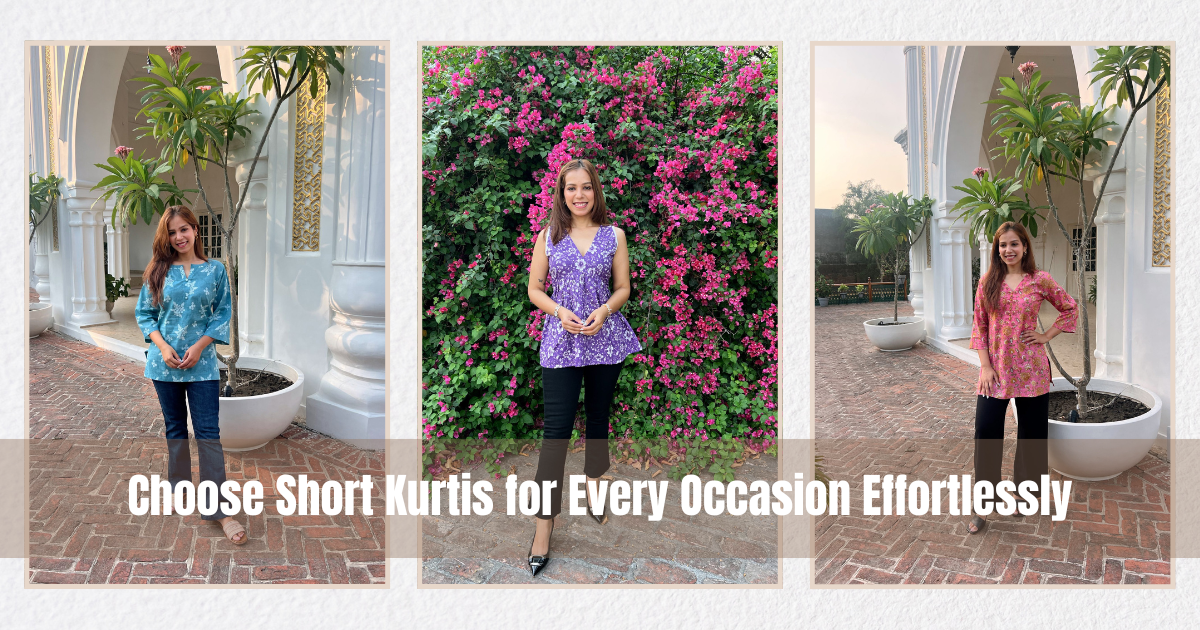
Short kurtis for women have become the most versatile piece in the modern Indian wardrobe and for good reason. Whether you are heading to the office on a hot July morning, attending a puja at a local temple, or flying abroad to visit family for Diwali, the right short kurti works where almost nothing else can: ethnic enough for Indian sensibilities, comfortable enough for a full day, and contemporary enough to pair with jeans, palazzo pants, or leggings without looking overdressed.
But “short kurti” covers a wide range of silhouettes, fabrics, and hem lengths and choosing the wrong one for your body type or occasion is an easy mistake to make. At Rangaari, we have been designing and sourcing short kurtis for Indian and NRI women since our founding in Pilibhit, Uttar Pradesh, and the questions we hear most often are always the same: Which cut suits my body? Which fabric works in this heat? Can I wear this to a temple? Can I order from the UK and trust the sizing?
This guide answers all of it from silhouette and length to fabric selection, occasion pairing, and a buying checklist you can run through before every purchase.
Short Kurtis and Indian Ethnic Wear: Why It Matters Now
India’s ethnic wear market is projected to reach ₹1.7 lakh crore by 2026 (BusinessWire – India Ethnic Wear Market Report), and kurtis and salwar kameez together account for 51% of Indian women’s ethnic wear by category (Statista, 2020). Short kurtis, once considered less traditional than full-length kurtas now lead both in daily wear and in online search volume, driven by younger Indian women and NRI buyers who want ethnic identity without sacrificing practicality.
The existing post on styling short kurtis with jeans has become one of Rangaari’s most-visited organic pages. This guide goes broader: every bottom, every occasion, every body type, and every fabric question all in one place.
What Exactly Is a Short Kurti? (Defining the Category)
Before cut and fabric, it helps to define what “short kurti” actually means. A short kurti is any kurti that falls above the knee typically between hip length (at the widest point of the hip) and mid-thigh (roughly 8–12 inches above the knee). This separates it from:
- Tunic: Falls mid-thigh to just above the knee; often plainer, more Indo-Western in silhouette
- Long kurta: Extends to the lower calf or ankle; typically worn with salwar, churidar, or pant
The ethnic detailing is what distinguishes a short kurti from a long casual top: yoke construction, pintuck pleating, block printing, embroidery at the neckline or hem, and traditional fabrics. That detailing is what makes it work for Indian occasions a plain top never could.
For a full category comparison, read: Kurta, Kurti, or Tunic – Which One Actually Fits Your Life?
Short Kurti Length Guide: Which Length Works for What
The most common question: “How short is too short?” Here is a practical breakdown by hem length and occasion suitability.
| Length | Where It Falls | Best Paired With | Occasion Suitability |
|---|---|---|---|
| Hip Length | At the widest point of the hip | Straight-fit or slim jeans, leggings | Office, college, casual errands, temple visits |
| Thigh Length | 4–6 inches below the hip | Palazzo pants, flared jeans, leggings | College, casual, festive daywear |
| Above-Knee | 8–12 inches above the knee | Skinny jeans, tailored trousers | Casual, home wear, beach |
| Asymmetric Hem | Shorter at front, longer at back/sides | Straight jeans, leggings | Casual, festive, college |
Niharika’s Note: For Indian and NRI women who are conscious about coverage at temple visits, family gatherings, or conservative professional settings, hip-length short kurtis give the most flexibility. They read as traditional and ethnic while still being contemporary and comfortable for a full day’s wear.
The Cut Guide: Which Silhouette Works for Your Body
This is the section most competitor sites skip. Your body shape matters more than any trend. Here is a silhouette-to-body-type match table – practical, not theoretical.
A-Line Short Kurti
- Shape: Fitted at bust and shoulders, flares out gradually toward the hem
- Best for: Pear-shaped figures (wider hips, narrower shoulders) the flare skims over the hips without clinging
- Pairs with: Straight jeans, leggings, fitted churidar
- Not ideal for: Very petite frames, flare at the hem can visually shorten the legs
Straight-Cut Short Kurti
- Shape: Uniform width from shoulder to hem, minimal tapering
- Best for: Apple-shaped figures (fuller midsection), hourglass figures, rectangular frames
- Pairs with: Almost anything, this is the most universally versatile silhouette
- Occasion: Office, formal, casual daily wear – the safe, always-correct pick
Flared Short Kurti (Anarkali-Short)
- Shape: Heavily flared hem, often with pleating or layered panels
- Best for: Slender figures, rectangular frames – the volume adds movement and femininity
- Pairs with: Fitted leggings, churidar, straight jeans
- Occasion: Festive, puja, family functions, weddings
Asymmetric-Hem Short Kurti
- Shape: Uneven hem, typically shorter at front, longer at sides or back
- Best for: Most body types; the diagonal line creates a slimming visual effect
- Pairs with: Leggings, jeggings, straight jeans
- Occasion: College, casual, contemporary festive
Peplum Short Kurti
- Shape: Fitted bodice with a ruffled or flared waistband overlay
- Best for: Straight and rectangular figures, the ruffle creates the illusion of a defined waist
- Pairs with: Slim jeans, tailored trousers
- Occasion: Office, brunch, college presentations
Quick Reference Table:
| Silhouette | Best Body Type | Best Bottom | Top Occasion |
|---|---|---|---|
| A-Line | Pear, Hourglass | Leggings, Straight Jeans | Office, Casual |
| Straight | Apple, Rectangle | All bottoms | Office, Daily Wear |
| Flared / Anarkali-Short | Slender, Rectangle | Leggings, Churidar | Festive, Puja |
| Asymmetric Hem | All types | Leggings, Jeggings | College, Casual |
| Peplum | Rectangle, Petite | Slim Jeans, Trousers | Office, Brunch |
Browse our full Short Kurtas Collection – all five silhouettes are available in XS to XXXL across cotton, rayon, and print variants.
Fabric Guide: The Right Fabric for Every Season and Occasion
Fabric is where most short kurti purchases go wrong. A georgette kurti that drapes beautifully in October becomes clingy and uncomfortable in May. Here is how to choose by season and occasion.
Cotton Short Kurtis
- Best season: Summer (March–June); year-round daily wear in North India
- Feel: Breathable, sweat-absorbing, stays cool against skin
- Care: Machine washable on gentle cycle; minimal ironing needed
- Occasion: Office, college, casual daily wear, outdoor errands, temple visits
- Rangaari note: Our cotton kurtis use single-weave 100% cotton, no synthetic blends, which matters when you are wearing them for 10+ hours in Pilibhit or Delhi summer heat
Rayon Short Kurtis
- Best season: Monsoon (July–September), transitional weather
- Feel: Lightweight and drapey; softer than cotton, slightly richer fall
- Care: Hand wash recommended; avoid machine wash on a hot or fast cycle
- Occasion: Casual, college, indoor office, festive-casual
- Note: Rayon loses shape if soaked, especially in monsoon downpours; air-dry flat
Georgette Short Kurtis
- Best season: Festive season (October–January), weddings, parties
- Feel: Flowy, slightly sheer (usually lined), elegant drape
- Care: Dry clean or extremely gentle hand wash in cold water
- Occasion: Diwali, Navratri, family functions, parties, NRI cultural events
- Styling note: Georgette in jewel tones (maroon, teal, midnight blue) photographs beautifully under indoor lighting – a practical consideration for NRI women dressing for Dussehra puja events or Diwali milans abroad
Chanderi and Silk-Blend Short Kurtis
- Best season: Wedding season and formal festive occasions
- Feel: Lightweight yet luxurious; the natural sheen elevates any silhouette
- Care: Dry clean or cold-water gentle hand wash only
- Occasion: Weddings, formal family functions, Diwali evening events
Linen Short Kurtis
- Best season: Summer (April–June), particularly in dry or coastal climates
- Feel: Breathable, slightly textured; natural wrinkle is now a stylistic feature
- Care: Machine washable on cool; slight shrinkage possible, size up if between sizes
- Occasion: Casual, outdoor, travel, beach, relaxed weekends
Fabric × Occasion Quick Matrix
| Occasion | Best Fabric | What to Avoid |
|---|---|---|
| Daily Office Wear | Cotton, Linen | Georgette, Silk-blend (too dressy) |
| College | Cotton, Rayon | Chanderi (too formal) |
| Festivals (Diwali / Navratri) | Georgette, Chanderi, Silk-blend | Linen (too casual for evening) |
| Puja / Temple Visit | Block-print Cotton, Chanderi | Rayon (can look too casual) |
| Summer Outdoors | Cotton, Linen | Georgette (traps heat) |
| Monsoon Indoors | Rayon | Linen (wrinkles in humidity) |
| NRI Event Abroad | Silk-blend, Georgette | Plain cotton (may read too casual for ethnic occasions) |
Pairing Guide: What to Wear Your Short Kurti With
Short Kurtis with Jeans
This is Rangaari’s most-searched styling combination, our dedicated post on styling short kurtis with jeans covers every silhouette and wash in detail. The key rules:
- Dark wash jeans: Pair with floral or printed cotton kurtis, the dark base anchors the print
- Light wash jeans: Pair with solid or subtle print kurtis to avoid visual conflict
- Flared or bootcut jeans: Pair with a straight or A-line kurti (avoid flared-on-flared)
- Baggy or wide-leg jeans: Pair with a fitted straight kurti to balance the volume
- White jeans: Pair with bold block prints or jewel tones for maximum contrast
Short Kurtis with Leggings
The most forgiving combination works for every body type, every occasion, every season.
- Black leggings: The universal base; works with almost any print or colour
- Churidar leggings: More ethnic; pairs naturally with A-line and flared silhouettes for festive occasions
- Cotton leggings: For summer; avoid synthetic leggings under cotton kurtis (adds heat unnecessarily)
Short Kurtis with Palazzo Pants
An excellent option for women who want coverage without the tightness of leggings.
- Choose a straight or A-line kurti – a flared palazzo with a flared kurti creates too much volume
- A printed palazzo with a solid kurti (or vice versa) keeps the look intentional
- This combination works perfectly with our Kurta Sets, where the palazzo or pant is already pre-matched to the kurti
Short Kurtis with Skirts
A modern Indo-Western pairing, especially popular among younger NRI women:
- A-line or flared midi skirt + fitted straight kurti = festive-casual
- Pencil skirt + peplum kurti = formal-contemporary
- Tiered skirt + printed A-line kurti = bohemian festive
Short Kurtis as Part of Loungewear
A growing category for women working from home, the short kurti with cotton leggings or a relaxed palazzo is now among the most comfortable home work outfits. Pair with our lounge wear sets for a co-ordinated at-home look.
Neckline Guide: Occasion Suitability by Neckline
| Neckline | Best Occasion | Styling Note |
|---|---|---|
| Round Neck | Office, College, Daily Wear | The safest, most universally flattering neckline; works on all body types |
| V-Neck | Office, Casual, Brunch | Elongates the neck; flattering on most figures |
| Mandarin / Band Collar | Formal, Festive, Office | Traditional ethnic feel; pairs well with churidar |
| Keyhole | Casual, College, Semi-Festive | Adds visual interest without being revealing |
| U-Neck | Casual, Home Wear | Relaxed feel; avoid for formal or conservative settings |
| Boat Neck | Festive, Semi-Formal | Broadens narrow shoulders; elegant on A-line and flared silhouettes |
| Sweetheart | Evening Events, Party | Reserve for festive evening occasions only |
Indian Occasion Guide: Which Short Kurti for What
Office Wear
Best fabric: Cotton or Linen
Best silhouette: Straight or A-line
Colour palette: Solids, subtle prints, block prints in muted tones
Best bottom: Dark jeans or formal trousers
Best neckline: Round, V-neck, Mandarin collar
Avoid heavy embroidery, sequins, or above-knee lengths in conservative professional environments. A straight-cut cotton kurti in a solid deep colour with a round or V-neck is almost always appropriate across sectors.
College
Best fabric: Cotton, Rayon
Best silhouette: Asymmetric, Straight, A-line, any of the three
Colour palette: Bold prints, florals, geometrics, colour-blocking
Best bottom: Jeans (all washes), leggings, palazzo
Best neckline: Round, V-neck, Keyhole
College is where you can experiment most freely with colour, print, and silhouette. An asymmetric-hem rayon kurti in a floral or geometric print with straight jeans is one of the sharpest college looks in this category.
Puja and Temple Visits
Best fabric: Block-print Cotton, Handloom cotton, Chanderi
Best silhouette: A-line or Flared
Colour palette: Traditional tones – rust, saffron, olive, cream, deep red, earthy green
Best bottom: Churidar, fitted palazzo
Best neckline: Round, Mandarin, Boat neck
For temple visits, pair with a dupatta or stole for additional coverage. Our Kurta Sets Collection includes several sets with matching dupattas that are ideal for puja settings, no need to source a separate dupatta.
Navratri and Diwali
Best fabric: Georgette, Chanderi, Silk-blend
Best silhouette: Flared / Anarkali-short, A-line
Colour palette: Jewel tones – teal, maroon, emerald, gold, fuchsia, midnight blue
Best bottom: Churidar, silk or embellished leggings
Best neckline: Boat neck, Mandarin, embellished V-neck or keyhole
Festive short kurtis look most complete when the fabric and colour carry the weight – keep the jewellery calibrated to the richness of the fabric. A heavily embroidered Chanderi kurti in maroon needs minimal jewellery; a plain georgette piece in teal can take a full set.
Casual Weekends and Errands
All fabrics, all silhouettes, personal preference rules. This is the occasion where comfort should be the only deciding factor. Cotton leggings and a printed A-line kurti are a reliable default.
For NRI Women: Ethnic Events Abroad
When dressing for a Diwali milan, family puja, or a cultural programme in the UK, US, Australia, or Canada, the practical requirements shift:
- Pack without creasing: georgette, rayon, and chanderi travel better than cotton (which creases heavily in luggage)
- Perform under indoor lighting: jewel tones and silk-blend sheen photograph better in dimly lit venues
- Account for size conversion: at Rangaari, our XS–XXXL size range maps explicitly to US sizes 0–22 and UK sizes 4–26 (size chart available on each product page)
- Layer for cold weather: a short kurti with a fitted jacket or blazer in wool or cotton blends for UK/US autumn events
India Brand Equity Foundation – Indian ethnic wear industry overview
Short Kurti Buying Checklist
Before any short kurti purchase, run through this list:
- Length: Hip-length, thigh-length, or above-knee? Does this work for the occasion?
- Silhouette: A-line, Straight, Flared, Asymmetric, or Peplum? Does it suit my body shape?
- Fabric: Cotton for summer / office? Georgette or Chanderi for festive? Rayon for monsoon?
- Neckline: Does the neckline match the occasion – round or V for office, Mandarin or Boat neck for festive?
- Bottom pairing: Do I have compatible bottoms – the right jeans, leggings, or palazzo?
- Size: Have I checked the size chart (especially for NRI buyers matching UK/US/AU sizes)?
- Care: Machine washable, hand wash only, or dry clean? Is that practical for how often I’ll wear it?
- Colour / Print: Does it work with what I already own, or am I buying an orphan piece?
Common Styling Mistakes to Avoid
- Pairing a flared kurti with wide-leg jeans or palazzo pants: two high-volume pieces cancel each other out. Choose one volume element and keep the other fitted.
- Choosing fabric by look alone, not by occasion: a gorgeous georgette kurti worn to a sweaty outdoor college event or summer errand run is a guaranteed uncomfortable day.
- Ignoring the neckline-occasion match: a deep V-neck in a temple, or a casual round-neck in a formal office, are both common oversights. Check the neckline before the print.
- Over-accessorising rich festive kurtis: if the fabric and embroidery are already doing the work (Chanderi, silk-blend with zari), keep the jewellery minimal. The kurti is the statement.
- Buying without reading the care label: rayon that needs dry cleaning is not practical daily office wear, no matter how beautiful it is on the hanger.
- Assuming Indian brand sizing is universal: sizing varies significantly across Indian brands. At Rangaari, we stock XS to XXXL and map our size chart explicitly to US, UK, and AU measurements on every product page. Never skip the size chart, especially for online orders.
Niharika’s Note: How We Think About Short Kurtis at Rangaari
“When we design a short kurti at Rangaari, the first question is always: where will this woman actually wear it – not at a photoshoot, but on an ordinary Tuesday? That is why our fabrics lean toward single-weave cotton and breathable rayon, and our cuts lean toward A-line and straight. The festive georgette pieces come later. We solve for everyday life first.”
— Niharika Agarwal, Founder & Lead Stylist, Rangaari
Explore our full range: Short Kurtas Collection for standalone kurtis, Kurta Sets for pre-matched dupatta/pant co-ordinates, and Tunics if you prefer a slightly longer silhouette. If you are expecting, our Maternity Dresses range includes kurti-inspired maternity fits designed for all three trimesters.
Frequently Asked Questions
What is the difference between a short kurti and a tunic?
A short kurti ends at hip to mid-thigh length and typically features traditional ethnic detailing – pintucks, yoke construction, embroidery, or block prints. A tunic sits at mid-thigh to just above the knee and tends toward a plainer, more Indo-Western cut. In practical terms: a short kurti reads as ethnic wear; a tunic can read as either ethnic or Western depending on the styling. For a full breakdown, read our guide on Kurta, Kurti, or Tunic – which one fits your life.
What is the best fabric for short kurtis in Indian summer?
Single-weave 100% cotton is the best fabric for Indian summer, it breathes, absorbs perspiration, and does not cling. Linen is an excellent second choice, particularly in dry heat. Avoid rayon and georgette for outdoor or extended summer wear; they trap heat and lose their drape when damp.
Can I wear a short kurti to a puja or temple visit?
Yes, a hip-length or thigh-length short kurti in cotton or Chanderi is entirely appropriate for temple visits and puja settings. Choose a block-print or handloom cotton in traditional colours (rust, saffron, cream, olive, deep red), pair with a churidar or fitted palazzo, and carry a dupatta or stole for additional coverage. Avoid sequins, very short hems, or sheer fabrics.
Which short kurti silhouette suits a pear-shaped body best?
An A-line short kurti is the most flattering silhouette for pear-shaped figures. It fits at the bust and shoulders and flares gradually outward, skimming over the hips without clinging. Pair with straight-fit jeans or leggings to keep the lower half streamlined and balanced.
How do NRI women size short kurtis when ordering from India?
Indian kurti sizing does not map directly to UK, US, or AU sizing. As a general guide, go up one to two sizes from your UK size (for example, UK 12 maps to Indian L or XL depending on the brand). At Rangaari, our size chart on every product page maps our XS–XXXL sizes explicitly to UK, US, and AU measurements, always refer to that before ordering.
Can I style a short kurti with palazzo pants?
Yes, but silhouette matching is important. Choose a straight or A-line kurti, not a flared one. If the palazzo is printed, keep the kurti solid (and vice versa). This pairing is one of the most comfortable festive daywear combinations and works particularly well with Kurta Sets where the palazzo is pre-matched to the kurti.
What short kurtis work best for Navratri and Diwali?
For Navratri and Diwali, choose a flared or anarkali-short silhouette in georgette or Chanderi fabric in a jewel tone – teal, maroon, emerald, fuchsia, or midnight blue. Pair with silk churidar or embellished leggings. A boat neck, embellished Mandarin collar, or keyhole neckline elevates the festive look. Keep accessories calibrated to the fabric if the kurti is heavily embroidered, go minimal with jewellery.
What are common styling mistakes to avoid with short kurtis?
The most common mistakes: (1) pairing a flared kurti with wide-leg bottoms – too much volume; (2) choosing fabric by look without considering the weather or occasion; (3) over-accessorising already-embellished festive fabrics; (4) skipping the neckline-occasion check before going out; (5) not reading the size chart when ordering online across brands. Run through the buying checklist above before every purchase.
Rangaari is a women’s ethnic wear brand based in Pilibhit, Uttar Pradesh, designed by Niharika Agarwal. We make comfortable, cotton-first Indian wear for everyday Indian and NRI women – available in XS to XXXL. All products ship to India and internationally.