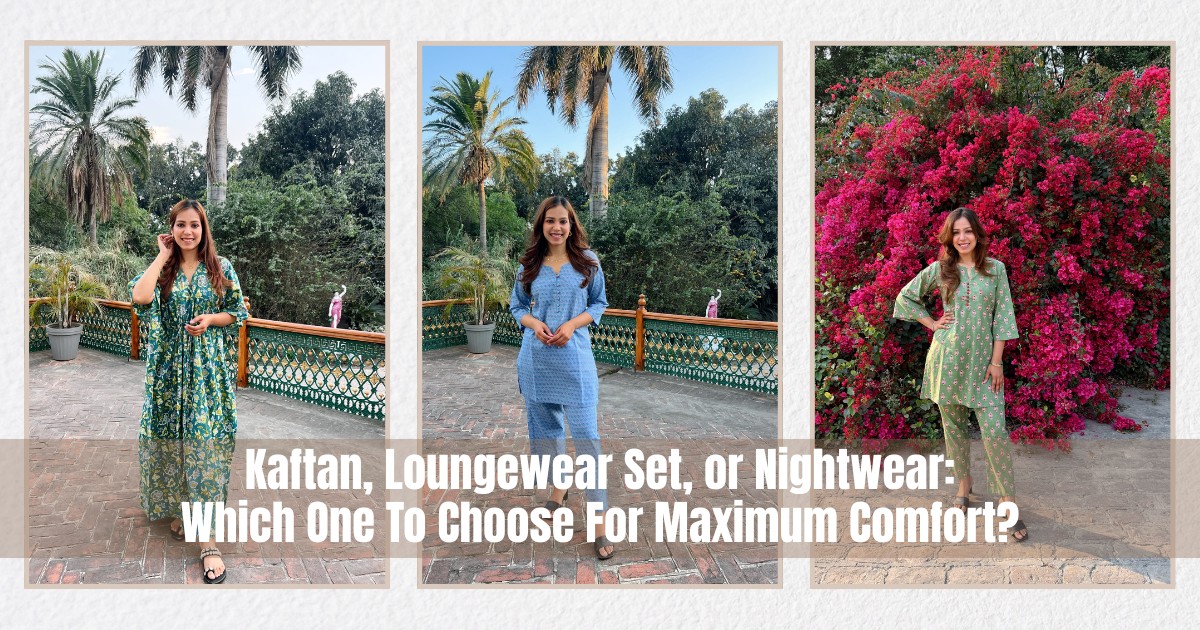
If you have ever stood in your bedroom at 7 AM wondering whether to reach for your kaftan, pull on a loungewear set, or just stay in nightwear – you are not alone. For Indian women in 2026, home comfort wear has quietly become one of the most considered wardrobe categories. This guide breaks down exactly when each garment wins, who buys it, and how to choose the one that fits your life.
Quick answer: A kaftan is the most versatile, it crosses from home to a quick errand run without a change. A loungewear set (coordinated top and bottom) is the best for structured rest days and working from home. Nightwear is purpose-built for sleep and is generally not day-appropriate. Most Indian and NRI women end up owning all three for different moments.
Kaftan vs Loungewear Set vs Nightwear: At a Glance
Here is a side-by-side comparison to help you decide before you shop.
| Feature | Kaftan | Loungewear Set | Nightwear |
|---|---|---|---|
| Best for | Home + quick outings, summer days, casual guests | WFH, structured rest days, relaxed evenings | Sleep, bedtime, post-shower wind-down |
| Fabric | Cotton, linen, rayon – breathable and draping | Cotton jersey, soft knit – stretchy and comfortable | Cotton, modal, satin – soft against skin overnight |
| Occasion | Daytime, home, semi-casual outings, festive home events | Daytime rest, WFH calls, evening lounging | Bedtime only (or relaxed mornings) |
| Who buys it | Women who want one piece that does everything at home | Women who prefer a put-together, coordinated look at home | Anyone prioritising sleep comfort above all |
| Indian/NRI fit | Culturally familiar, can be worn to answer the door | Modern, urban-friendly, less traditional | Strictly private – not culturally appropriate outside the bedroom |
| Rangaari pick | Short kaftans, printed kaftans in cotton | Loungewear sets in soft cotton-jersey | Nightwear in breathable cotton |
What Is a Kaftan?
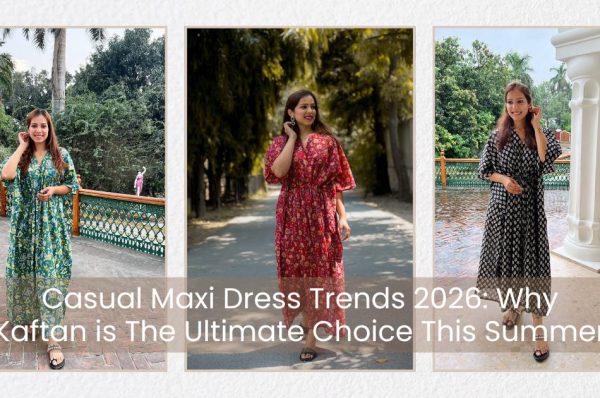
A kaftan is a loose, flowing garment – originally rooted in Middle Eastern and South Asian textile traditions that has become a staple of relaxed Indian dressing. A kaftan typically falls anywhere from the hip to the ankle, is made in a single piece (no separate bottoms required), and is designed to be slipped on without thought. The silhouette is generous: it does not cling, does not restrict, and works equally well for a large or petite frame.
For Indian women, the kaftan occupies a unique cultural middle ground. It reads as “casual Indian” without being formal enough to require pairing with a dupatta. It is the piece you wear when you want comfort but also want to look presentable if someone rings the doorbell. In coastal regions and in summer, the kaftan is the dominant home-wear choice.
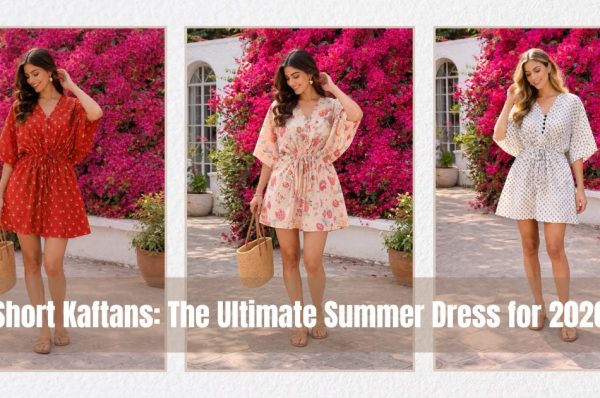
Short kaftans, knee to mid-calf have become particularly popular among younger Indian women and NRI buyers, because they travel well and can substitute for a dress on casual vacation or outing days. Printed kaftans in block-print cotton or ikat give the garment an ethnic warmth that makes it feel like a deliberate style choice rather than just comfort wear.
At Rangaari, the kaftan collection focuses on soft breathable cotton in Indian prints designed for hot weather, simple care, and all-day home wear.
What Is a Loungewear Set?
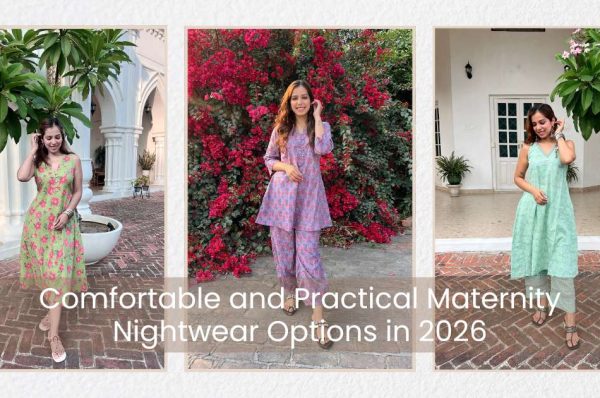
A loungewear set is a matched two-piece, typically a top (crop, tank, or half-sleeve) paired with co-ordinated shorts, trousers, or wide-leg pants, designed for relaxed daytime wear at home. The key word is co-ordinated: a loungewear set looks intentional, like you chose an outfit, even if you never left the house.
Loungewear sets have grown dramatically in India since 2020, as work-from-home culture made home wear visible on video calls. The set format solves a specific problem: how to look put-together when you are sitting at a desk at home, without wearing office clothes or dealing with the effort of a full ethnic outfit. A coordinated cotton loungewear set with a clean print and proper collar gives you that balance.
For NRI women, loungewear sets are often the preferred “rest day” choice because they align visually with Western casual-wear norms while still using Indian fabrics and cuts. They pack flat, they are easy to wash, and they do not wrinkle in the way that cotton sarees or anarkalis do.
Browse Rangaari’s loungewear collection for co-ordinated sets in soft cotton, available in a range of prints and solids that work across summer and winter.
What Is Nightwear?
Nightwear is sleep-specific clothing: designed for comfort between bedsheets, not for visibility or versatility. Indian nightwear traditionally included cotton salwar sets (a functional, modest choice) or simple printed pyjama-kurta sets. More recently, satin nightwear, modal shorts sets, and printed nightgowns have entered mainstream Indian wardrobes through e-commerce.
The defining feature of nightwear is that it prioritises skin-level comfort above all else, softness, breathability, and the absence of anything that restricts movement while sleeping. For Indian women in hot climates, cotton or modal fabric with a relaxed cut is almost always the best nightwear choice. Satin looks luxurious but can be sweaty in India’s humid summers.
Nightwear is culturally understood to be private wear in most Indian households – not appropriate to wear in common areas when guests are present, and not suitable as “house clothes” during the day. This is the key distinction between nightwear and a kaftan or loungewear set: the kaftan and the set are day-appropriate; nightwear is not.
The Indian and NRI Home Comfort Wear Decision
For Indian women buying home comfort wear, the purchase decision usually comes down to three questions: Is this for day or night? Will I be seen by others? Do I want one piece or a coordinated set?
Buy a kaftan if:
- You want a single-piece garment that requires no matching
- You live in a hot climate or find Indian summers unbearable
- You may need to step outside briefly (a quick errand, receiving a delivery, a visit from a neighbour)
- You prefer ethnic prints and draping silhouettes
- You are an NRI who wants “Indian casual” for home days without a full ethnic outfit
Buy a loungewear set if:
- You work from home and need to look presentable on video calls
- You prefer a co-ordinated, outfit-like look even at home
- You want something that layers well in cooler months
- You share a home and want to be comfortable but not in sleepwear during the day
- You travel frequently and want a versatile pack-easy comfort set
Buy nightwear if:
- Sleep quality is your primary concern
- You tend to overheat at night and need maximum breathability
- You have a dedicated sleep wardrobe separate from daytime wear
- You prioritise softness and low friction over any visual considerations
Fabric Guide: What Indian Women Wear at Home by Season
Fabric is often the most important variable in home comfort wear, especially in India where the temperature range across a year is extreme. Here is a quick reference.
| Season | Best Kaftan Fabric | Best Loungewear Fabric | Best Nightwear Fabric |
|---|---|---|---|
| Summer (Apr–Jun) | 100% cotton, linen | Cotton jersey, cotton-slub | Cotton, modal |
| Monsoon (Jul–Sep) | Cotton, fast-dry fabrics | Cotton jersey | Cotton (breathable) |
| Winter (Oct–Feb) | Heavier cotton, printed fleece | Fleece, thick jersey, sherpa | Flannel, thick cotton |
For Indian summers specifically, lightweight 100% cotton in a loose weave is the gold standard for all three categories. Avoid polyester blends in the summer, they trap heat and moisture against the skin, which makes even the best-designed garment uncomfortable.
How to Build a Home Comfort Wardrobe the Indian Way
Most Indian women’s home wardrobes are accidental a mix of old cotton salwar sets, oversized t-shirts, and whatever arrived as a gift. An intentional home comfort wardrobe usually needs just three pieces:
- One or two kaftans: your daytime default. A printed short kaftan for the warmer months and a full-length cotton kaftan for evenings cover most situations.
- One loungewear set: for structured rest days, video calls, or days when you want the feeling of wearing an outfit without the effort. A simple co-ordinated cotton set in a solid or minimal print works all year.
- Two sets of nightwear: your dedicated sleep wardrobe, washed regularly. Cotton pyjama sets or a simple cotton nightgown, depending on your sleep preferences.
This three-tier system means you are never stuck choosing between “too casual” and “too formal” when you want to feel comfortable at home.
What Rangaari Makes for Home Comfort
Rangaari is a Pilibhit-based Indian womenswear brand focused on comfortable, everyday clothing made in soft cotton. The home comfort range spans kaftans (printed and plain, in short and full-length options), coordinated loungewear sets, and nightwear – all in breathable Indian cotton, sized from XS to XXXL for inclusive fit.
Browse the full range: kaftans · loungewear sets
If you are building your home comfort wardrobe for the first time or refreshing it after years of making-do, both the kaftan and the loungewear set are strong starting points. For size guidance across categories, also see our guide on choosing between a kurta, kurti, and tunic – the same size logic applies.
Frequently Asked Questions
What is the difference between a kaftan and a loungewear set?
A kaftan is a single-piece loose garment worn over the body with no separate bottom; it is versatile enough for both home and brief outdoor wear. A loungewear set is a co-ordinated two-piece (top and bottom) designed for comfortable daytime wear at home, especially suited for work-from-home situations or when you want an outfit-like look indoors.
Can I wear a kaftan outside the house?
Yes. A cotton kaftan especially a short kaftan is appropriate for casual outdoor wear: a quick errand, a market trip, or receiving guests at home. It sits culturally in the “smart casual Indian” zone. A full-length kaftan with ethnic print works well at home gatherings and relaxed social occasions.
What is the difference between nightwear and a kaftan?
Nightwear is designed for sleep and is generally not day-appropriate, its fabrics and styling are optimised for comfort in bed, not for visibility. A kaftan is a daytime home garment that looks intentional and is suitable for being seen. The main overlap is in fabric (both often cotton), but the occasion and social context are different.
Which home comfort wear is best for Indian summers?
A short cotton kaftan is generally the best choice for Indian summers: it requires no matching, allows maximum airflow, and can be worn all day. If you prefer a two-piece, a cotton loungewear set with shorts is equally comfortable. Avoid polyester blends in any category during the summer months.
Is a kaftan suitable for NRI Indian women?
Yes, kaftans are very popular among NRI Indian women for home days, especially in warmer climates. They provide the comfort of casual Western wear with an Indian aesthetic particularly block-print or ethnic-print cotton kaftans. NRI buyers often order kaftans in multiple prints because they travel flat, wash easily, and work as a “carry-on home outfit” for India visits.
What should I buy first: kaftan, loungewear, or nightwear?
Start with one kaftan and one loungewear set. The kaftan covers your daytime home needs and occasional quick outings while the loungewear set handles structured rest days and video calls. Add dedicated nightwear separately for your sleep wardrobe. Most Indian women find the kaftan is the most-worn of the three once they own all of them.
Does Rangaari make plus-size kaftans and loungewear?
Yes. Rangaari makes all home comfort wear in XS to XXXL, with a generous, inclusive fit. The kaftan silhouette in particular is naturally size-friendly: the draping cut means the same print works across a wide range of body sizes without alteration.