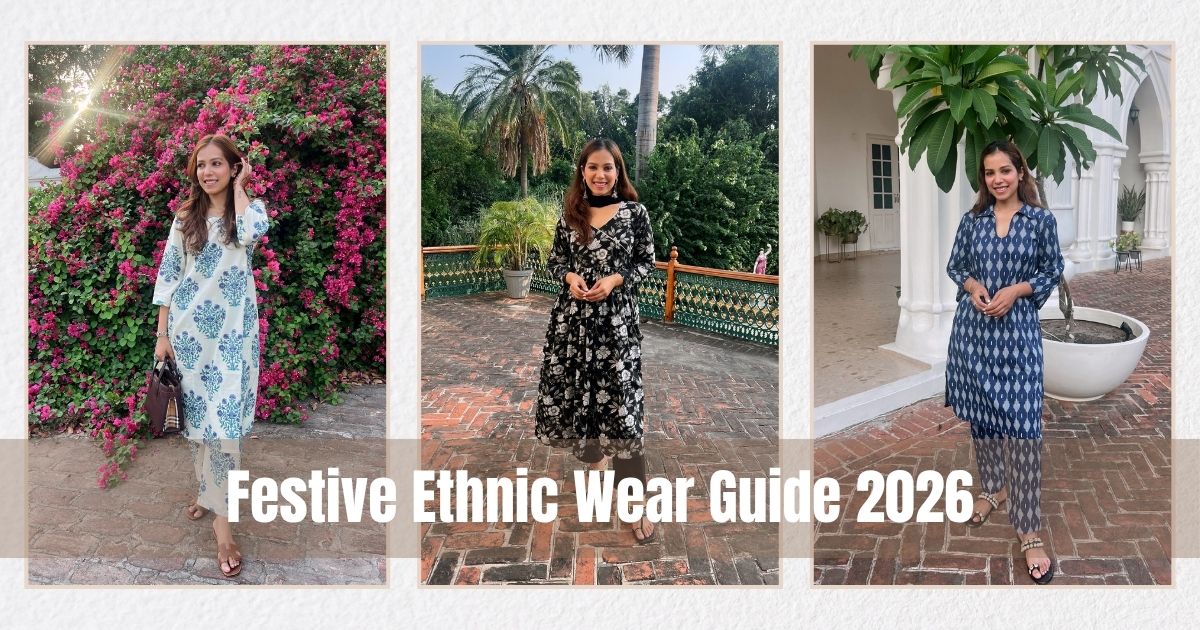
Festive season in India runs on a tight, unforgiving calendar – Navratri’s nine days of colour-coded dressing lead almost directly into Karva Chauth, and both collapse into the multi-day marathon of Diwali. Most women end up shopping for each occasion separately, at the last minute, and paying festive-season markup for it. This guide covers all three, Diwali, Navratri, and Karva Chauth with distinct outfit ideas, fabric logic, and colour direction for each, so you can plan one festive wardrobe instead of three panic-shopping trips.
India’s festive and wedding ethnic wear market crosses ₹1.7 lakh crore annually, with Q3–Q4 accounting for the sharpest spike in the category (Fibre2Fashion, Indian ethnic wear market data). Search interest for “Diwali outfit ideas” and “Navratri dress” both peak in the four weeks before each festival, which means the women searching this guide today are shopping ahead of the rush, and that is exactly the right instinct.
Festive Season 2026 at a Glance: What’s Different This Year
Three shifts are shaping festive dressing in 2026, and they run through every section below:
- Colour-blocking over single-tone. Instead of one dominant shade, festive 2026 outfits pair two contrasting colours in a single set – a jewel-tone kurta with a contrast dupatta, or a lehenga skirt in one colour with a blouse in another.
- Comfort-first festive fabrics. Chanderi and cotton-silk blends are outperforming pure heavy silk this year – women want a fabric that survives a 6-hour Navratri dandiya session or a Diwali evening of standing, not just a photograph.
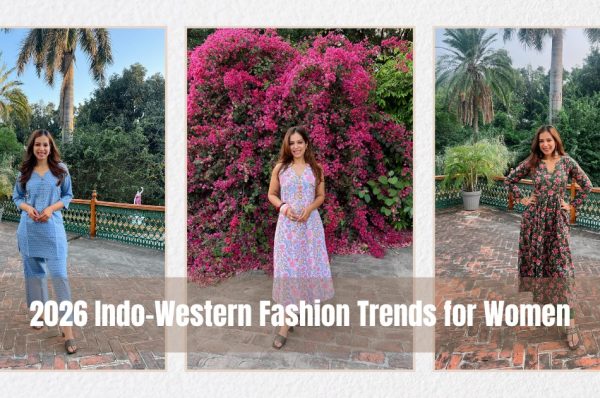
- Co-ord and Indo-western crossover. Festive dressing is borrowing more from co-ord sets and fusion silhouettes than in past years. See our Co-ord Sets Styling Guide and Indo-Western Fusion Wear guide for how that crossover plays out beyond the three occasions covered here.
Diwali Outfit Ideas 2026: What to Wear for Each Diwali Event
Diwali is rarely a single event, it is a run of pujas, family evenings, and parties across 3-5 days, each with a different dress code. Here is how to plan it without buying five separate outfits.
Lakshmi Puja Evening (At Home, With Family)
This is the most traditional moment of Diwali, and the dress code follows suit: rich colour, modest silhouette, comfortable enough to sit through an hour-long puja.
- Best pick: A 3-piece chanderi silk kurta set in red, maroon, or gold, with a matching dupatta draped for the aarti.
- Colour direction: Red, maroon, deep gold traditionally auspicious for Lakshmi Puja and still the dominant search and purchase colour for this specific evening.
- Why chanderi works here: It has enough sheen to look festive under diya-light and lamp glow without the weight or heat of heavy silk, and it drapes cleanly through repeated sitting and standing.
Diwali Party / Get-Together (Evening Out)
A shift from ritual to celebration calls for a bolder, more photograph-ready outfit.
- Best pick: A georgette or silk-blend Anarkali kurta set, or a fusion co-ord set for a younger, contemporary take – pair with statement jewellery.
- Colour direction: Jewel tones – emerald, royal blue, wine work particularly well for evening lighting and photographs; this is where colour-blocking (a jewel-tone kurta with a contrasting dupatta) reads best.
- Fit note: Choose an Anarkali or A-line silhouette if you’ll be standing and mingling for hours as it moves better than a fitted straight-cut kurta.
Diwali Office Celebration (Daytime)
Most workplaces now run a Diwali dress-up day or small in-office celebration, and it calls for festive without being over-the-top.
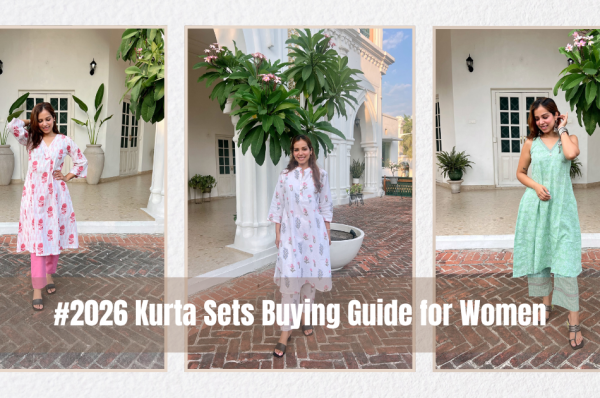
- Best pick: A cotton-silk or chanderi 2-piece kurta set with a straight pant – festive fabric, work-appropriate silhouette. Our upcoming Ethnic Office Wear guide covers this crossover in more depth if office-festive dressing is a recurring need, not a once-a-year one.
- Colour direction: Mustard, rust, or soft gold read as festive without being as attention-grabbing as full red or fuchsia.
Diwali fabric care tip: Diwali outfits meet diya smoke, sparkler ash, and food splashes in the same evening. Chanderi and cotton-silk blends handle a gentle spot-clean far better than pure silk, which stains more visibly and needs dry-cleaning after almost every wear.
Navratri Outfit Ideas 2026: Nine Nights, Nine Colours, One Wardrobe Plan
Navratri’s day-wise colour code is the single biggest dressing constraint of the festive season and the biggest wardrobe-planning opportunity, because once you know the sequence, you can shop for a coherent nine-piece rotation instead of nine unrelated outfits.
The 2026 Navratri Colour Sequence
While the exact sequence is confirmed closer to the festival each year by regional tradition, the broadly followed order runs:
| Day | Colour | Symbolism |
|---|---|---|
| Day 1 | Grey / Royal Blue | Strength, protection |
| Day 2 | Orange | Warmth, energy |
| Day 3 | White | Purity, peace |
| Day 4 | Red | Passion, devotion |
| Day 5 | Royal Blue | Wealth, calm |
| Day 6 | Yellow | Happiness, positivity |
| Day 7 | Green | Growth, new beginnings |
| Day 8 | Peacock Green / Grey | Uniqueness |
| Day 9 | Pink / Purple | Compassion, ambition |
Note: The specific colour-to-day mapping is regionally variable and confirmed via local temple/community calendars each year – treat the sequence above as a widely-used directional guide, not a fixed national standard.
What to Actually Wear Across Nine Nights
Buying nine full outfits is neither necessary nor budget-sensible. Build a capsule of 3-4 versatile pieces in flexible cuts, and rotate:
- A flared kurta or Anarkali set in a bright, twirl-friendly silhouette is essential for Garba and Dandiya nights where movement matters more than structure.
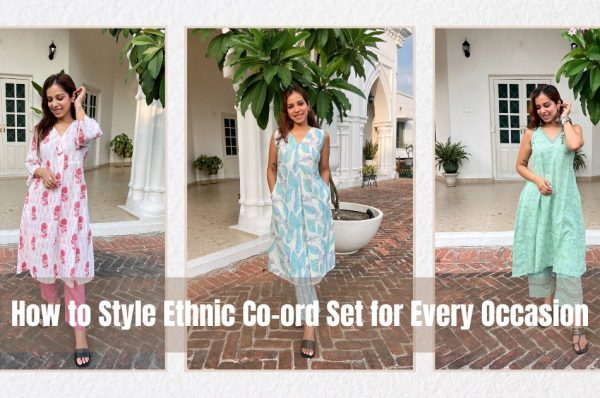
- A co-ord lehenga-style set for the two or three nights you’re attending a bigger community event – see the Co-ord Sets Styling Guide for mix-and-match combinations that stretch across multiple colour-code days.
- A simple cotton kurta set for the quieter, at-home puja nights, comfort over spectacle.
- Statement dupattas or stoles in the remaining colours is the fastest, cheapest way to hit a day’s colour code without buying a new outfit each time.
Fabric for Dandiya and Garba Nights
Dandiya and Garba involve hours of continuous movement, so fabric choice matters more here than at any other festive occasion:
- Best: Cotton, cotton-silk blends, and light rayon are breathable, holds shape through spinning, doesn’t cling with sweat.
- Avoid: Heavy silk or velvet is too warm for sustained dancing, and heavy embellishment can catch or tear during fast movement.
- Silhouette: Flared kurtas, lehenga-cholis, or circle-skirt co-ord sets photograph and move best on the dance floor.
Karva Chauth Outfit Ideas 2026: Red, Ritual, and What to Wear Through a Full Day
Karva Chauth has a narrower, more specific dress code than Diwali or Navratri. It centres on bridal-adjacent red and gold, worn through a full day of fasting, a sargi in the early morning, and a moonrise ritual at night.
The Traditional Colour and Why It Holds
Red remains the dominant Karva Chauth colour by a wide margin as it symbolises marital prosperity and is treated as close to non-negotiable by most married women observing the festival, though maroon, deep pink, and red-gold combinations are widely accepted variations.
- Best pick: A red or maroon chanderi or georgette kurta set, or a saree, with gold jewellery and, where the couple observes the tradition, matching or complementary colours with the husband’s outfit.
- Comfort consideration: Because the day includes fasting from sunrise, a well-worn, breathable fabric that doesn’t feel restrictive matters more than on almost any other festive occasion, avoid tight blouses or heavily boned fits that become uncomfortable over a long day.
Sargi to Moonrise: Dressing for the Full Day
- Early morning (sargi, pre-dawn): A simple, comfortable kurta or nightwear is fine as the main outfit typically comes on later in the day.
- Daytime (puja preparation, mehendi if applicable): A lighter red or pink kurta set is comfortable enough for hours of preparation and a possible mehendi session.
- Evening (moonrise ritual): The most elaborate outfit of the day can be a red or maroon chanderi/silk-blend set or saree with full jewellery, worn for the puja thali ritual and the moon-sighting.
Practical Note on Fasting-Day Fabric
Chanderi and cotton-silk blends are more forgiving than heavy silk for a fasting day because they don’t trap heat the same way, a real consideration on a day when the body is already under mild physical stress from not eating or drinking since sunrise.
Festive Fabric Comparison: Diwali vs. Navratri vs. Karva Chauth
| Occasion | Best Fabric | Why | Colour Direction |
|---|---|---|---|
| Diwali (Puja) | Chanderi silk | Festive sheen, breathable, drapes well seated | Red, maroon, gold |
| Diwali (Party) | Georgette, silk-blend | Fluid movement, photograph-ready | Jewel tones |
| Diwali (Office) | Cotton-silk, chanderi | Festive but work-appropriate | Mustard, rust, soft gold |
| Navratri (Dandiya/Garba) | Cotton, cotton-silk, rayon | Breathable through hours of movement | Day-wise colour code |
| Navratri (At-home puja) | Pure cotton | Comfortable, low-maintenance | Day-wise colour code |
| Karva Chauth | Chanderi, georgette, cotton-silk | Comfortable through a full fasting day | Red, maroon, gold |
How to Shop Smart for Festive Season 2026 (Without Overspending)
- Build a capsule, not a wardrobe. Three or four versatile kurta sets in flexible colours (a red/maroon piece, a jewel-tone piece, a cotton everyday piece) can be styled across Diwali, Navratri, and Karva Chauth with accessory changes alone.
- Buy 3-piece sets for occasions with a dupatta ritual – Karva Chauth’s puja thali moment and Diwali’s aarti both involve a dupatta drape, and a matched-fabric 3-piece set looks noticeably more finished than a separately sourced dupatta.
- Shop the capsule pieces early. Festive-season demand compresses into a 4-week pre-festival window every year, and the best fabric-colour combinations sell out first, not last.
- Cross-shop the occasion guides. If your festive planning also touches everyday or office dressing around the same weeks, our Indo-Western Fusion Wear guide cover the days between the festivals.
Browse Rangaari’s festive kurta sets collection and kaftans and dresses for pieces that carry across all three occasions covered in this guide.
Frequently Asked Questions
What colour should I wear for Diwali 2026?
Red, maroon, and deep gold remain the most traditional choices for Lakshmi Puja evening, while jewel tones like emerald and royal blue work well for Diwali parties and evening celebrations. Mustard and rust are popular, less-bold choices for office Diwali celebrations.
What is the Navratri colour for each day in 2026?
The widely followed sequence runs grey/royal blue, orange, white, red, royal blue, yellow, green, peacock green/grey, and pink/purple across the nine days, but the exact mapping is regionally variable, so it’s worth confirming against your local community or temple calendar before finalising outfits.
What should I wear for Karva Chauth if I’m not comfortable in heavy silk?
Chanderi silk and cotton-silk blends are excellent substitutes as they carry the same festive sheen and red/maroon colour tradition as heavy silk but are noticeably lighter and more breathable, which matters on a day that includes fasting.
Can I wear the same outfit for both Diwali and Karva Chauth?
Yes, both occasions favour red, maroon, and gold, so a 3-piece chanderi or georgette kurta set in one of these colours works for both. Change the jewellery, dupatta drape, or add a statement bindi to differentiate the two looks.
What fabric is best for Navratri dandiya nights specifically?
Cotton, cotton-silk blends, and light rayon are the best choices for Dandiya and Garba as they’re breathable through hours of dancing and hold their shape without clinging or trapping heat, unlike heavier silk or velvet.
Rangaari Style Team ~ for more occasion-specific styling, see our Kurta Sets Buying Guide, Co-ord Sets Styling Guide, and Indo-Western Fusion Wear guide.