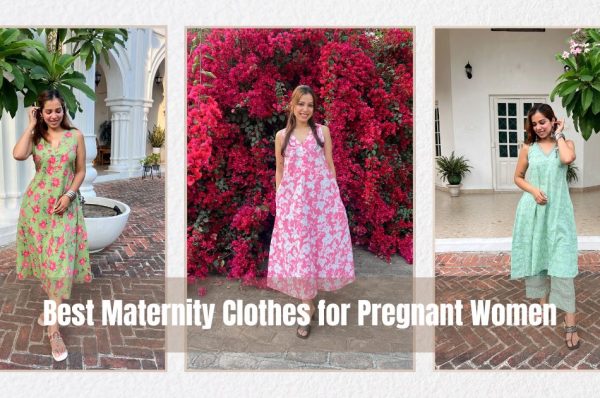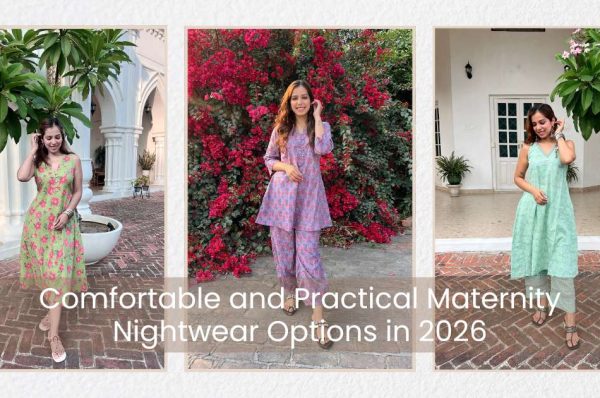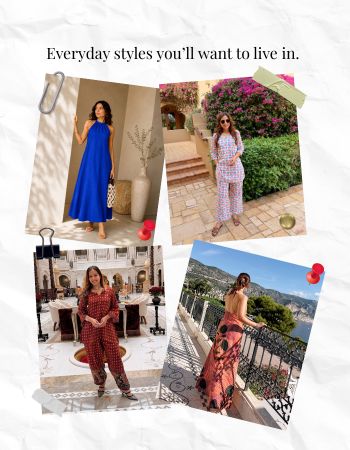
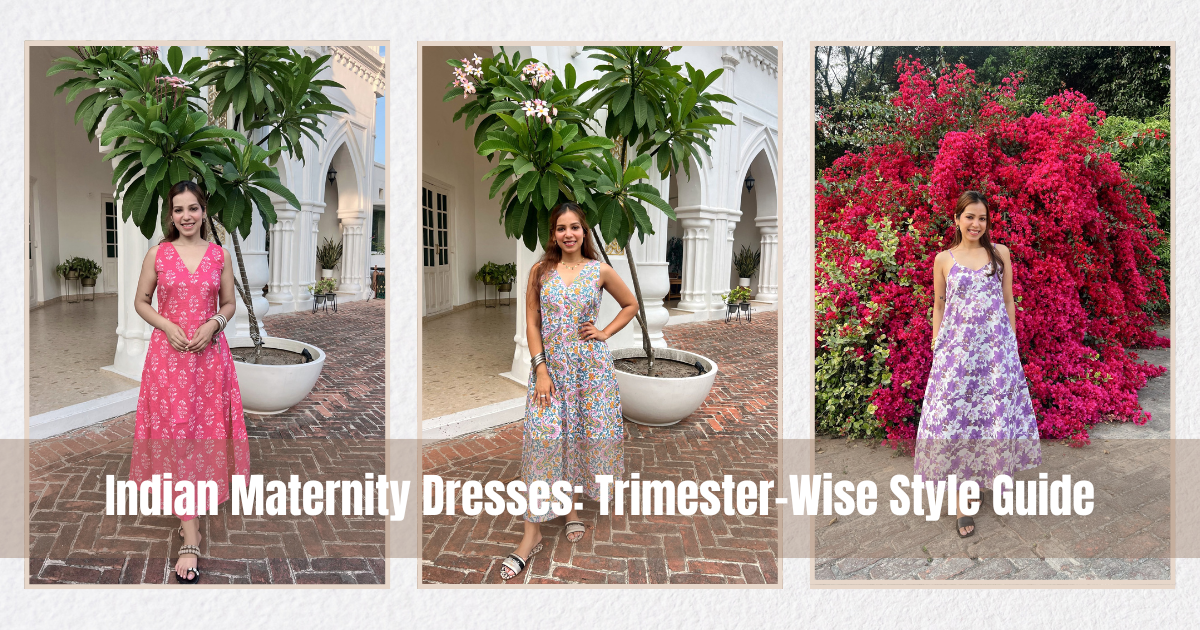
Choosing maternity dresses for Indian women is harder than it looks. Your body changes every few weeks, the Indian summer demands breathable fabrics, and somewhere in those 40 weeks you have a godh bharai to attend, a Diwali to dress for, and a hundred well-meaning relatives reminding you that “comfort is most important.” They are right but comfort and style are not opposites. This guide walks you through exactly what to buy, when to buy it, and what to wear it to, trimester by trimester.
Whether you are building your pregnancy wardrobe from scratch or trying to figure out why nothing fits in your sixth month, this guide covers fabrics, fits, Indian occasions, sizing, and everything you should avoid, all in one place.
Why Maternity Dressing Is Different in India
In most Western maternity guides, you will read about leggings and stretchy jeans. That advice does not translate well to Indian conditions, or to Indian wardrobes.
Indian summers regularly cross 40°C. North Indian plains, where many of our customers are based, combine intense heat with high humidity from June through September. Your pregnancy already raises your body temperature, synthetic fabrics make it worse. Cotton is not just a preference here; it is a practical requirement for at least seven to eight months of the year.
The second difference is occasion density. A pregnant Indian woman is likely to attend a baby shower, at least one puja, a family wedding, a festival (Navratri, Diwali, or Eid depending on your calendar), and countless visits from relatives, all while her body is actively changing. A capsule wardrobe that covers both daily comfort and dressy occasions without needing to be replaced every four weeks is the real goal.
The third difference is that Indian ethnic silhouettes – kurtis, tunics, maxi-length kaftans, empire-waist dresses are inherently pregnancy-friendly. They are already designed without rigid waistbands, they drape rather than cling, and they look dressed-up even in pure cotton. You do not necessarily need a special “maternity” label on every piece you buy.
First Trimester (Weeks 1–12): You Do Not Need Much Yet
What is happening to your body
In the first trimester, your bump is usually not visible. You may feel bloating (which can make a tight waistband unbearable), breast tenderness, and fatigue. Most of your regular clothes will fit but anything with a fitted waist or a stiff waistband will start to feel restrictive even before you look pregnant.
What to buy in Trimester 1
Keep it minimal. Your body will change dramatically between week 12 and week 28, clothes you buy at week 8 may not fit at week 24. Invest in a few transitional pieces rather than a full wardrobe.
The best T1 buys:
- Flowy tunics and long kurtas. Empire-waist or A-line silhouettes that skim the waist rather than nipping it. A cotton tunic in a relaxed fit will work from week 1 through at least week 20. Explore Women’s Tunics Collection for cotton and modal options.
- Wrap-style or tie-front kurta sets. The adjustable waistline means they grow with you without looking too big early on.
- Elastic-waist palazzos or comfort pants. Replace fitted salwars now. A wide-leg palazzo with a drawstring waist paired with an empire-waist kurti is the T1 uniform.
Budget tip: Do not buy expensive, heavily embellished pieces in T1 unless they are for a specific occasion. Your shape in T2 and T3 will be different enough that a heavily fitted festive suit bought now may not work later.
What you do not need yet: Dedicated maternity panels, side-zip dresses, or very large-sized A-line maxi dresses. Those come in T2.
Second Trimester (Weeks 13–26): Your Main Buying Window
What is happening to your body
The second trimester is when most women feel the best during pregnancy – energy returns, morning sickness usually eases, and the bump becomes visible and grows steadily. Your hips widen, your bust size increases, and by week 20 you will need clothes that are genuinely bump-friendly, not just “a bit loose.”
This is the trimester to invest in your maternity wardrobe.
What to buy in Trimester 2
Maxi maternity dresses are the best value buy of T2. A full-length A-line or empire-waist maxi dress in cotton or jersey (rayon mix) will accommodate your growing bump while looking put-together for outings. It doubles as a baby shower outfit if you choose a slightly dressy fabric like georgette or a cotton-silk blend.
A-line kurta sets with palazzo bottoms. The A-line kurta, fitted at the chest and flaring from just below the bust is one of the most flattering and comfortable styles for pregnancy. It works at this stage because it highlights the bump elegantly without clinging to it. Browse Maternity Dresses Collection for current bump-friendly options.
Sizing rule for T2: If you were a size M before pregnancy, buy a size L or XL for T2 pieces, and XL or XXL for anything you want to wear into T3. Do not size up aggressively early, a dress that is three sizes too large in week 14 will not look good. Add one to two sizes above your pre-pregnancy size for T2 buys.
Waist-adjustable styles: Side-knot tunics, tie-front kurtas, and wrap dresses give you flexibility as your belly grows week by week.
NRI note: If you are based in the UK or US, Indian sizing runs smaller than Western sizing. Rangaari’s XS–XXXL range uses a size chart that maps to UK/US measurements, check the size guide on each product page before ordering.
Third Trimester (Weeks 27–40): Comfort Above Everything
What is happening to your body
By the third trimester, your bump is at its largest. Lower back pain, swollen ankles, shortness of breath, and increased heat sensitivity are common. Anything that restricts your abdomen, puts pressure on your back, or traps body heat is going to make you miserable.
What to buy in Trimester 3
Loose maxi dresses in pure cotton or modal. The looser the better at this stage, you want fabric that drapes around your bump with no pressure points at all. A pull-on, side-open, or front-tied maxi dress that you do not have to wrestle into is ideal.
Front-open and side-knot designs. Garments with front hooks, buttons from the neckline down, or adjustable side ties are easier to put on and take off when your bump makes bending difficult.
Hospital bag dress: If you are planning a hospital birth, include one loose, front-open cotton dress or kaftan in your hospital bag. Choose a solid colour or a subtle print (so photographs look nice) in a fabric you would not mind discarding afterwards if needed. The garment should have easy chest access for skin-to-skin contact immediately after birth.
Comfortable maternity nightwear is also essential in T3. For a full guide to what works at night including side-tie gowns and feeding-friendly designs read our dedicated guide: Comfortable Practical Maternity Nightwear Guide.
After the Baby: Maternity Dresses That Work Postpartum
Your maternity wardrobe does not stop being useful at delivery. Several styles continue to serve you well in the first three to six months after birth.
A-line maxi dresses in cotton work postpartum because they are forgiving around the midsection while your body finds its new normal. They also make breastfeeding easier than fitted tops do.
Front-open and wrap designs are especially valuable postpartum because they offer discreet nursing access. A wrap-style kurta or a button-front tunic lets you nurse without needing to lift your entire top.
Empire-waist tunics that flare from the bust down do not grip the abdomen at all, which is comfortable for the first several weeks after a C-section.
Rangaari’s Feeding Friendly Tunics Collection is designed specifically for this phase, tunics with hidden side or front access that look like regular ethnic wear from the outside.
Fabric Guide: What to Wear During Pregnancy
The fabric question is the most important practical decision you will make in building a pregnancy wardrobe. Here is how the most common fabrics stack up for Indian conditions.
Cotton Incorporated Global Lifestyle Monitor India – consumer fabric preference data
| Fabric | Breathability | Stretch | Best Trimester | Best for | Machine Wash Safe |
|---|---|---|---|---|---|
| 100% Cotton | Excellent | Low–Medium | T1, T2, T3, Postpartum | Daily wear, Indian summers, sensitive skin | Yes |
| Jersey / Rayon Mix | Good | High | T2, T3 | Maxi dresses, wrap styles, bump-hugging looks | Yes (cold wash) |
| Modal | Excellent | Medium–High | T1, T2, Postpartum | Nightwear, loungewear, soft everyday tops | Yes |
| Linen | Excellent | Very Low | T1, T2 | Hot weather, casual daywear, holiday looks | Hand wash recommended |
| Georgette / Chiffon | Moderate | Low | T2 (occasions only) | Baby shower, weddings, festive functions | Dry-clean or hand wash |
| Polyester | Poor | Medium | Not recommended | — | — |
The most important column is “Breathability.” In Indian heat, a fabric that traps body heat is not just uncomfortable, it raises your core temperature, which matters more during pregnancy. Choose cotton or modal as your base for daily wear, and reserve georgette for occasions only.
What about synthetic stretch fabrics? Polyester and nylon blends stretch well, which is why they show up in many budget maternity ranges. However, they do not breathe, they retain odour, and they can cause skin irritation, avoid them next to skin, especially as your belly grows.
Indian Occasion Guide: Dressing for Key Pregnancy Moments
Pregnancy in India is rarely a quiet affair. Here is how to dress for the events that are most likely to happen during your nine months.
Godh Bharai (Baby Shower)
The godh bharai is your most photographed moment during pregnancy. You want something that looks festive, highlights your bump beautifully, and is comfortable enough to sit, stand, eat, and receive blessings in for three to four hours.
Best choices: An empire-waist anarkali or a flowing maxi dress in a celebration fabric – cotton-silk blend, georgette, or a light embroidered cotton in a festive colour (pastel yellow, mint green, dusty pink, ivory, or deep teal all photograph well). Avoid very stiff fabrics (like net or heavy brocade) that will be uncomfortable if you need to sit for long periods.
Size tip: Buy your godh bharai outfit no earlier than two weeks before the event, especially if it falls in your T3.
Festive Occasions (Navratri, Diwali, Teej, Eid)
Indian festivals typically involve puja, dancing, or long family gatherings, all situations where you will be on your feet and possibly moving around. Cotton chanderi, cotton-silk, and soft georgette tunics or kurta sets are ideal. A coordinated dupatta adds the festive element without adding bulk.
Avoid heavy embroidery or embellishments on the stomach area, they can feel scratchy as your bump grows and they add weight that falls directly on your abdomen.
Wedding Guest
Go for a flowing silhouette, a full-length A-line suit, a maxi dress in georgette, or a palazzo kurta set with light embroidery. Mid-bump embellishment (at chest level, not waist level) looks celebratory and is comfortable. Avoid anything with a fitted waist band or heavy petticoat underpinning, a saree in T2 or T3 is manageable but tiring to drape and wear for a full evening.
Daily Wear and Work from Home
This is the largest portion of your wardrobe. Cotton kurta sets, tunics with wide-leg palazzos, and comfortable maxi dresses in organic cotton cover your daily needs. Kurta Sets Collection offers a range of cotton sets that work through all three trimesters with simple sizing up.
Travel During Pregnancy
Choose your most breathable, most wrinkle-resistant fabrics. Cotton and modal travel well, they come out of a bag without needing ironing. Avoid linen (high-wrinkle), georgette (needs care), and polyester (heats up in aircraft and confined spaces).
Sizing Through Pregnancy: A Practical Guide
Pregnancy sizing confuses a lot of first-time buyers. Here is the simplest framework:
T1 (weeks 1–12): Stay in your regular size or size up by one. Focus on styles with no fitted waistband.
T2 (weeks 13–26): Size up by one to two sizes from your pre-pregnancy size. If you were a size M, buy L or XL. For maxi dresses and kaftans, XL offers the best growing room.
T3 (weeks 27–40): Size up by two to three sizes from pre-pregnancy, or go by your current bust measurement. A full-length loose maxi dress or A-line design in a large size is more forgiving than a fitted dress in an extra-large.
NRI sizing: Rangaari’s range runs XS–XXXL. For reference: Indian L typically corresponds to UK 12–14, Indian XL to UK 14–16, Indian XXL to UK 18–20. Check individual product size charts, some styles run larger than average.
NHS – Body changes and pregnancy comfort guide
What to Avoid When Buying Maternity Dresses in India
- Tight elastic waistbands: even at full stretch, a firm elastic band at the waist can feel restrictive as your bump grows and cause discomfort at the very point where pressure is least welcome.
- Polyester and synthetic blends against skin: especially during Indian summers. These fabrics trap heat and sweat, increasing skin irritation and overheating risk.
- Underwire bras or structured bodices built into dresses: your bust changes size multiple times during pregnancy; structured bodices do not accommodate this well.
- Very short hemlines: your centre of gravity shifts during pregnancy, making balance less stable. Hemlines that are mid-thigh or shorter can make you self-conscious and are harder to move confidently in.
- Heavy embellishments on the bump zone: sequins, heavy zardosi, or thick embroidery placed directly on your abdomen adds weight and can feel scratchy against a stretched belly.
- Dry-clean-only fabrics for daily wear: you will want to wash your maternity clothes frequently. A garment you cannot machine-wash (or at minimum hand-wash at home) will cause frustration quickly. Reserve dry-clean fabrics for special occasions only.
- Buying too far ahead: don’t stock up on T3 pieces in your first trimester. Wait until your body is showing you exactly what you need.
- Very dark colours in peak summer: dark colours absorb more heat. In T2 and T3, when you are already warmer than usual, lighter colours and breathable weaves make a measurable comfort difference.
Niharika’s Note: A Word from Rangaari’s Founder
At Rangaari, we design with Indian conditions in mind first. Every fabric choice starts from the question: will this be comfortable in a Pilibhit summer? The same standards guide our maternity range.
Our maternity dresses use 100% cotton and cotton-modal blends – no synthetic lining, no polyester filler. The silhouettes are deliberately A-line and empire-waist because these styles flatter a growing bump without trying to contain it.
For each trimester, here is what I would personally reach for from our collection:
T1: A cotton tunic from our Women’s Tunics Collection in your regular size. Save the maternity-specific pieces for when you actually need them.
T2: Our empire-waist maxi in a cotton-jersey blend from Maternity Dresses Collection. It is the piece I hear about most from customers, it stretches with the bump and still looks composed enough for a get-together.
T3: The loosest, most forgiving full-length cotton dress we make, in a print that makes you feel like yourself. Comfort and identity are not at odds, even at 38 weeks.
— Niharika Agarwal, Founder, Rangaari
Related Reading
- Best Maternity Dresses 2026 — Rangaari Picks: our curated product guide to the maternity range
- Comfortable Practical Maternity Nightwear Guide: what to sleep in across your trimesters and after delivery
Frequently Asked Questions
What types of maternity dresses are best for Indian women in summer?
100% cotton or cotton-modal blend maxi dresses and empire-waist kurtis are the best choice for Indian summers. They breathe well, do not trap heat against your skin, and accommodate a growing bump without restriction. Avoid polyester or synthetic blends, which trap body heat, this matters more during pregnancy when your core temperature is already higher than usual.
How early should I start buying maternity clothes?
Most women need their first maternity-specific pieces around week 14–16, when the bump begins to show and regular waistbands become uncomfortable. For T1 (weeks 1–12), loose regular-sized tunics and elastic-waist bottoms are usually sufficient. The main buying window is T2 (weeks 13–26) – invest in your core pieces then, because they will carry you through the rest of the pregnancy.
Can I wear regular Indian kurtas during pregnancy?
Yes, especially in T1 and early T2. A regular cotton kurta in a relaxed, A-line, or empire-waist silhouette works well through much of pregnancy. The key is the silhouette: anything fitted at the waist will become uncomfortable. Pair a loose kurta with elastic-waist wide-leg palazzos rather than fitted salwars, and you have a functional maternity look without buying dedicated maternity pieces.
What is the best fabric for maternity dresses in India?
Cotton is the top choice for daily wear, it breathes in Indian heat, is gentle against sensitised pregnancy skin, and is easy to wash at home. Modal is excellent for nightwear and loungewear because of its softness. Jersey (rayon-blend) offers the best stretch for bump-hugging maxi dresses in T2 and T3. Linen works well in cooler months. Georgette and cotton-silk blends are reserved for occasions, comfortable for a few hours, but not practical for all-day wear in hot conditions.
What should I wear to my godh bharai (baby shower)?
For a godh bharai, choose a flowing empire-waist or A-line garment in a celebration fabric, cotton-silk, georgette, or a light embroidered cotton. Festive colours photograph beautifully (pastels, jewel tones, ivory). Avoid stiff fabrics like heavy net or brocade that will feel uncomfortable during a long sitting ceremony. Buy the outfit no more than two weeks before the event if it falls in your third trimester, as your size changes quickly near term.
How do I choose the right maternity dress size?
As a starting point: add one size for T1, one to two sizes for T2, and two to three sizes for T3. If you were a pre-pregnancy size M, buy L or XL for T2 and XL or XXL for T3 maxi dresses. For NRI buyers: Indian L approximately equals UK 12–14, XL equals UK 14–16. Always check the individual product size chart, as sizing varies by silhouette. Rangaari’s range runs XS–XXXL.
Do Rangaari maternity dresses work for breastfeeding after delivery?
Several Rangaari designs work well postpartum. A-line and empire-waist maxi dresses remain comfortable in the weeks after delivery. For nursing-specific access, look at the Feeding Friendly Tunics Collection, these are designed with hidden side or front openings that allow discreet feeding without removing the garment. Wrap-style and button-front kurtas from the general range also provide practical nursing access.
How many maternity dresses do I actually need?
A practical maternity wardrobe for Indian conditions can be built around five to seven core pieces: two or three cotton maxi dresses or tunics for daily wear, one or two kurta sets with elastic-waist bottoms, one dressy piece for occasions, and one comfortable nightwear option. You do not need a large wardrobe, you need the right pieces, in the right fabrics, bought at the right trimester stage.
At Rangaari, we believe comfort and cultural identity are not a trade-off. Our maternity and women’s wear collections are designed in India, for India from the fabric choices to the silhouettes. Explore the full Maternity Dresses Collection or browse the Kurta Sets Collection and Women’s Tunics Collection for pieces that work across your pregnancy and beyond.
Disclaimer: This guide covers clothing comfort during pregnancy. It is not medical advice. Please consult your doctor or midwife for health guidance during pregnancy.